 By admin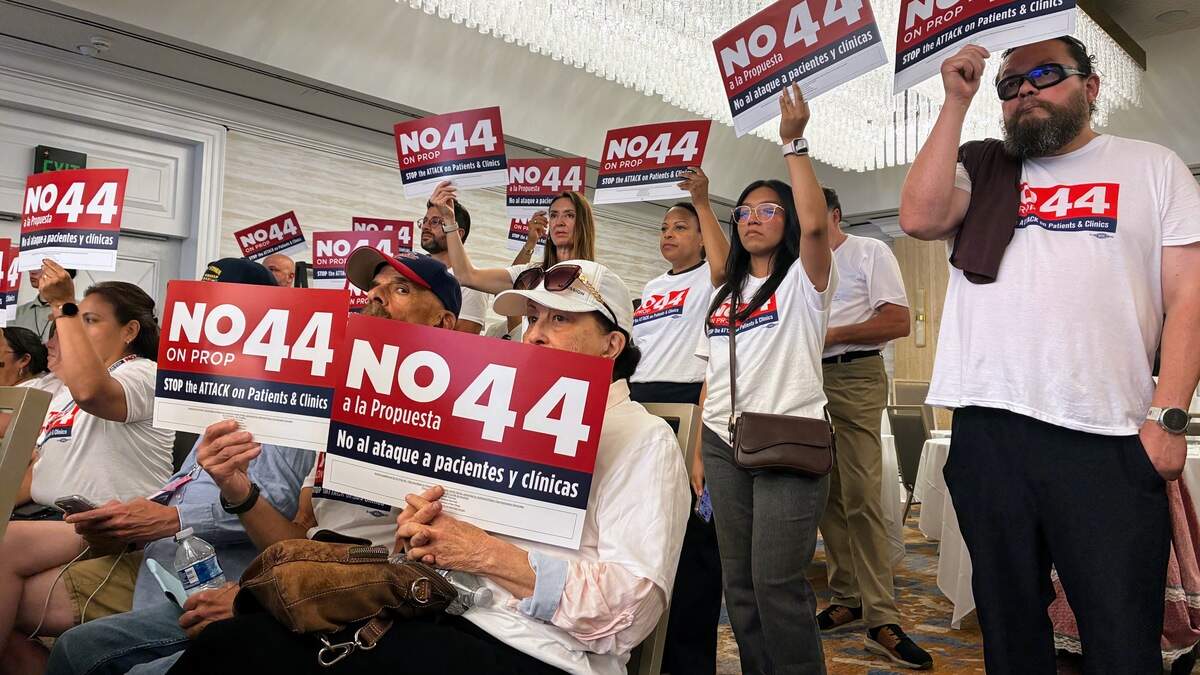
The healthcare union behind a proposed California billionaire tax has a second, less-talked-about ballot measure with a different target: health clinics.
Read more Sacramento leaders offer assurances of transparency on future data center projects
SEIU-United Healthcare Workers West’s Proposition 44 would require nonprofit, federally funded clinics that care for underserved populations to spend 90% of their revenues on services that advance their mission. If they don’t comply, they would face fines that would be returned to them if they hit the 90% spending target within five years.
The union argues that clinics are investing their revenue poorly, wasting it on everything from art to executive compensation of up to $1.9 million a year.
But its more numerous critics argue the measure represents an existential crisis for the clinics it purports to save. They say Prop. 44 is the latest in a series of ballot battles waged by SEIU-UHW President Dave Regan that’s really aimed at creating leverage over employers in labor negotiations.
The backdrop for the fight is H.R. 1, the mixture of tax cuts and a Medicaid overhaul signed by President Donald Trump last year. That bill is expected to cause 2 million Californians to lose health insurance by 2030, according to the UC Berkeley Labor Center.
SEIU-UHW argues that Prop. 44 will strengthen clinics by making them more accountable, while its critics say it will weaken them at a time of acute need.
While SEIU-UHW insists it will put resources behind the measure, the union hasn’t invested any major funds in Prop. 44 since May, instead funneling its dollars to support the billionaire tax. Opponents of the measure, meanwhile, had $32 million in cash on hand as of the end of June and have continued to raise money since then.
The proposition is one of the least popular of the 14 statewide measures on this year’s ballot, according to a Public Policy Institute of California poll released Tuesday. Just 34% of the 1,745 California adults surveyed said they backed it.
What clinics pass the Prop. 44 benchmark?
At its heart, Prop. 44 centers on tax returns that every nonprofit files with the federal government.
Clinics and other nonprofits are required to report how much revenue they make and how much they spend on program services. Prop. 44 uses that number as the baseline for its calculation of “mission spend ratio.” The California attorney general could modify what is or isn’t included on that list that would count toward the 90% spending on program services.
Brad Fulton, head of Indiana University’s Philanthropy Research Hub who is not involved in the fight, assessed the potential impact of Prop. 44 at the request of The Sacramento Bee using their tax returns.
Fulton found that 89% of the 147 California clinic organizations (many of which operate multiple clinics) would fail to meet Prop. 44’s spending threshold and face $1.6 billion in first year fines. Of the 16 organizations that did meet it, all but two had finances in the red, suggesting they are financially distressed. Fulton argued the proposition effectively would limit clinics from accumulating surpluses and reserves.
“Almost no health center in the U.S. meets Prop. 44’s standard,” Fulton wrote.
California Primary Care Association President Francisco Silva said clinics anticipated the growing need for their services, pointing to the effects of HR 1.
“This is the time to actually grow health centers so we can serve that patient base, not to cut them back,” Silva said in an interview.
Both the Democratic and Republican state parties formally adopted a “no” stance on Prop. 44. Other organizations opposed to the measure include Planned Parenthood Affiliates of California, the California Teachers Association and the California Chamber of Commerce.
The only group to endorse Prop. 44 beyond its sponsor is the California Federation of Labor.
Spokesperson Renée Saldaña said she expected more organizations to join the coalition. She said the measure is designed to hold taxpayer-funded clinics to a higher standard.
“We want to cut what we see as wasteful spending and redirect that money so that patients can access this care when they need it,” Saldaña said in an interview.
The fight behind the fight
Prop. 44 wound up on the ballot after a breakdown in negotiations between Regan, the SEIU-UHW president, and Silva’s California Primary Care Association.
Silva said those negotiations centered on unionization efforts at clinics rather than the clinic spending at the center of Prop. 44 — proof, he contends, of Regan’s true intentions with the measure.
SEIU-UHW has often filed ballot measures for organizations that have resisted its unionization efforts, including a series of recent measures that would have placed new regulations on dialysis clinics.
The union has increasingly turned its attention to clinics, some of which are already unionized.
It initially sought to pass a version of Prop. 44 through the Legislature. Its 2025 bill, which failed to pass, would have exempted clinics that set up “labor-management cooperation committees” from the 90% threshold.
“The emergency is here now,” Saldaña said. “Clinics are already closing and so we took it directly to the voters.”
Some clinics that would be affected by Prop. 44 have fought unionization efforts. For example, Innercare, which operates more than a dozen health and dental clinics across the state, spent more than $577,000 on a consulting firm that aimed to discourage workers from joining the union in 2024, according to federal filings.
The National Labor Relations Board is currently considering allegations that Innercare illegally harassed and terminated employees during the 2024 unionization drive. SEIU-UHW alleges that Innercare retaliated against pro-union workers, offered perks to anti-union workers and engaged in unlawful surveillance.
Innercare Executive Vice President Young Kwon said in a statement that more than 60% of the workers voted against joining the union and that the company is “committed to fostering a respectful, lawful and supportive workplace.”
“Innercare denies that it engaged in unlawful conduct or violated employees’ rights under federal labor law in any way,” Kwon said.
Prop. 44 critics like Silva those fights shouldn’t be lumped together with the ballot measure, which wouldn’t change anything about clinic unionization.
“It’s an accusation to distract from what’s really in front of the voters,” he said.
Read more Expert Predictions For Detroit Lions Matchup With Buffalo Bills