 By admin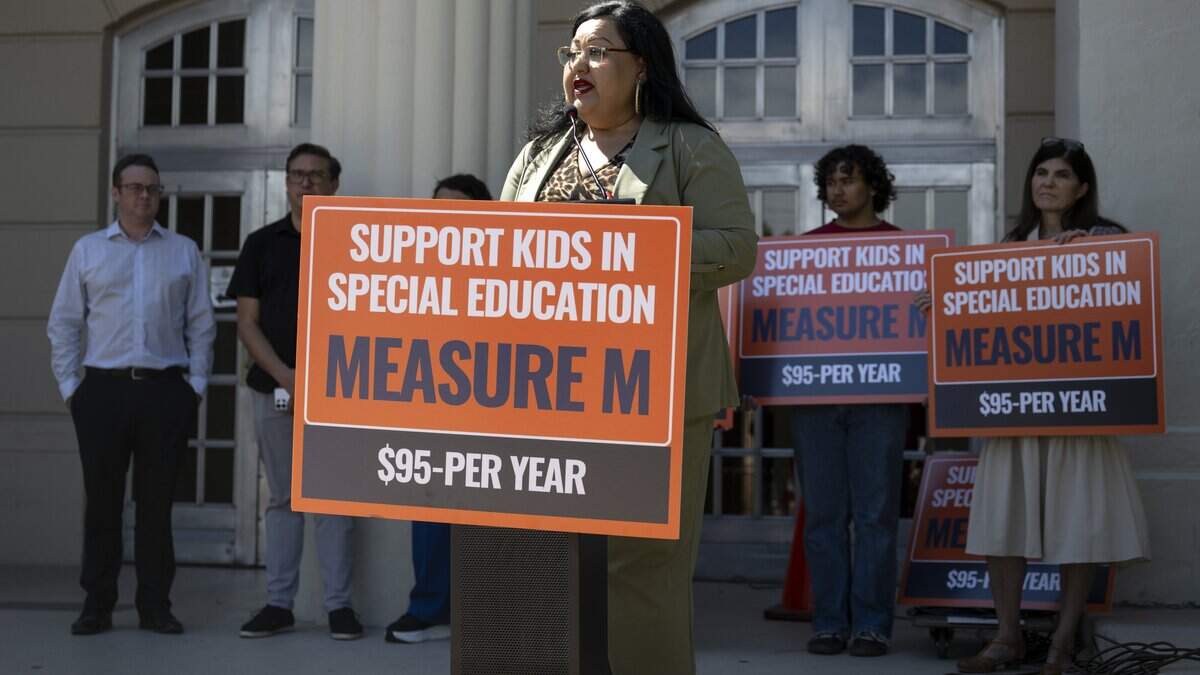
Sacramento City Unified School District officials and local labor leaders urged voters Tuesday to approve a parcel tax that would raise an estimated $10 million annually for special education and early-intervention programs within the district.
Read more Why some California Republican voters plan to vote for an establishment Democrat
The campaign launch followed the board’s July approval to place the measure on the November ballot. If approved by two-thirds of voters, the tax would initially add $95 per parcel to property owners’ annual tax bills.
National Education Association President Princess Moss endorsed the measure on her first day leading the 3-million member union, pointing out the federal government provides around 12% toward the 40% funding target established under the Individuals with Disabilities Education Act.
“That gap doesn’t disappear,” Moss said Tuesday at a news conference outside C.K. McClatchy High School. “It lands on Sacramento and in classrooms across the country.”
A parcel tax is a yearly charge property owners pay for each property they own within the school district, with some seniors and people who receive disability benefits qualifying for exemptions. If voters approve the measure, the tax would take effect July 1, 2027. According to the district’s full ballot measure, the money could pay for early-intervention programs, behavioral and social-emotional services, specialized staff and classroom resources.
The tax will apply to parcels within the school district, which covers much of the city of Sacramento south of the American River and stretches east into Rancho Cordova. The portions of the city in the Natomas, Twin Rivers and Elk Grove school districts will are not involved in the election.
The news conference came after Gov. Gavin Newsom signed Assembly Bill 126, which included a $2.4 billion increase in funding for special education programs across California. But SCUSD trustee April Ybarra said the increase would not translate into a significant funding boost for individual districts.
Read more Fruit bars, chocolate, rice and more: See latest food recalls in California
“Will there be some relief from that? Sure, but it’s not enough,” Ybarra said.
As for Sacramento City Unified, Ybarra noted, the district has seen an increase in students requiring intensive special education services, which she attributed partly to a lack of early intervention. With students’ unmet needs often becoming more apparent in middle and high school, when academic demands increase and educators have less time and fewer resources to help, Ybarra stressed the importance of addressing those needs earlier.
Special education costs have become a major source of financial strain for Sacramento City Unified, which has been scrambling for nearly a year now facing $222 million structural deficit. The district’s unrestricted general fund contribution to special education increased from $73.6 million in 2018-19, before the pandemic, to a projected $172.3 million in 2025-26.
However, Ybarra sought to distinguish the measure from the district’s fiscal crisis.
“There shouldn’t be confusion, in my opinion, because this measure is not a measure to fix a receivership,” Ybarra said.
“This is a measure to bring in funding so that we have early interventions for our students before they get to a state of needing intensive services.”
Read more Marie Mertz’s Elk Grove restaurant Todo Un Poco is ‘based in community’