 By admin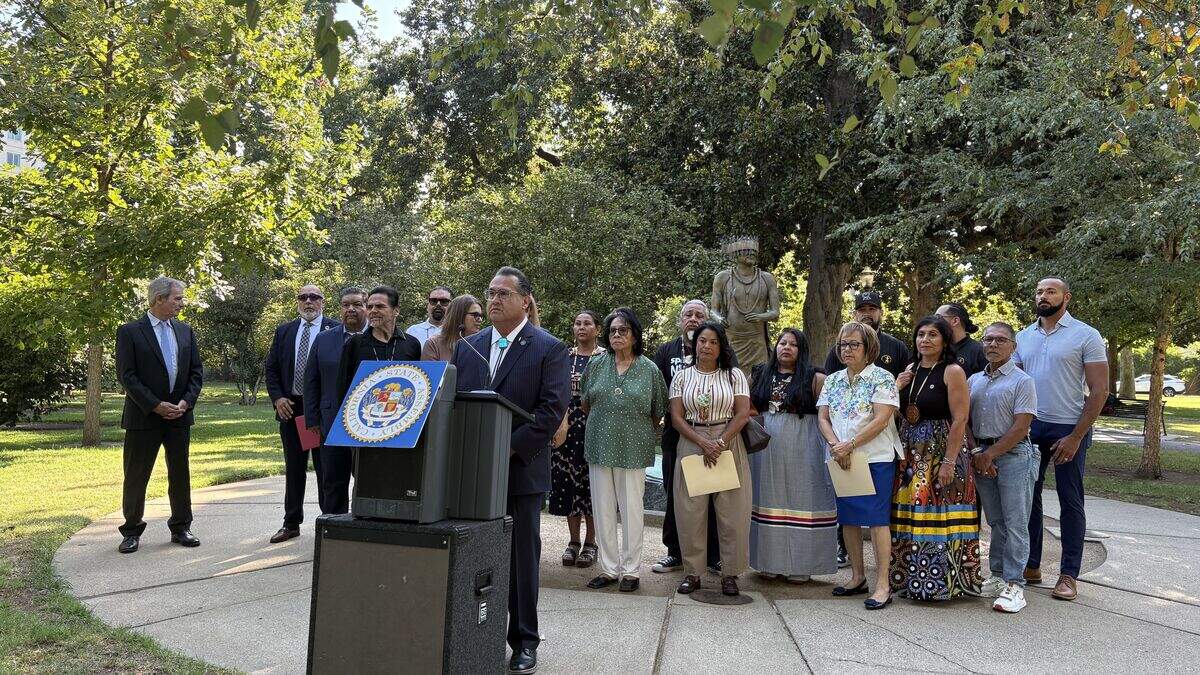
More than a year after a state audit concluded that the University of California lacked accountability and urgency in its Native American repatriation efforts, tribal leaders and legislators denounced the higher education system’s ongoing shortfalls in returning human remains and cultural items it holds at its campuses.
Read more Bonta says CA’s suits against Trump protected $200B in funding. What did they cost?
“Native Americans have long been denied the ability to inter the remains of those who preceded us. We will never stop demanding its fundamental recognition of respect and our humanity,” said Assemblymember James Ramos, D-Highland.
Ramos is the first California Native American elected to the Legislature and serves as chair of the Native American legislative caucus.
A 2025 audit found that the UC system had not been able to identify the magnitude and locations of its collections nor had it properly cared for the items it possessed. The system’s planning for and monitoring of repatriation efforts at its campuses were inadequate, it said, and significant portions of funding allocated for this work were going unspent.
To address these issues, the auditor made 18 systemwide recommendations. Only six had been fully implemented by the one-year mark. The outstanding problems include slow progress on searching for and identifying items and missing timelines for completion of repatriation work.
“Human remains are not archaeological or academic trophies. They don’t deserve to be held in boxes on shelves. Lack of funding, insufficient staffing or changes in personnel cannot continue to be an excuse for the state of California and the UC system,” Ramos said.
He was joined by Muwekma Ohlone Tribe Chairwoman Charlene Nijmeh, Redding Rancheria Chairman Jack Potter Jr. and other tribal leaders in appealing for quicker progress and greater accountability.
The federal Native American Graves Protection and Repatriation Act of 1990 and its 2001 California counterpart CalNAGPRA require government agencies and museums that maintain collections of Native American human remains and cultural items to return them to appropriate tribes.
More than three decades since the federal NAGPRA was enacted, the UC system has returned a little over half of the more than 17,000 human remains and 650,000 objects it holds. The university expects its counts of cultural items to increase as consultation with tribes proceeds and more objects are identified.
Read more Hilton accuses Becerra of running ‘abuse camps,’ shares migrant child testimony in Fresno
In its 2025 report, the California state auditor found that the four campuses it reviewed would take at least another decade to complete repatriations if they continued at the current rate. UC San Diego would complete its effort in 2037 while UC Riverside and UC Santa Barbara would finish only in 2041 and 2053 respectively. UC Berkeley, which holds a massive collection, would be able to achieve 75% repatriation by 2089 if it worked at five times its current rate.
The pace, however, is picking up. At a legislative hearing Tuesday, UC Vice President Theresa Maldonado said the university had registered only 57 instances of repatriation between 1990 and 2018. In contrast, it had completed 191 repatriations between 2018 and 2026.
Acknowledging the “deep and ongoing harm” that the university has caused tribal communities through the removal of Native American remains and items from their rightful places and subsequent slow repatriation, Maldonado apologized for the past and said the UC was committed to changing its practices.
“Tribes are frustrated, and we are exhausted. We’re exhausted by the broken promises. We’re exhausted by the studies. We’re exhausted by the audits that confirm what we already know year after year, only to be followed by more audits confirming the same failures,” said Mary Ann Andreas, tribal council member for the Morongo Band of Mission Indians. “Progress that requires a tribe to fight this hard for this long is not a functioning system. It is a system that has placed the entire burden of its own enforcement on the very communities it was designed to protect.”
The UC system adopted a new NAGPRA policy in 2022 that emphasized meaningful consultation and barred research, teaching and loaning of Native American items without consent of tribal nations. It has also increased staffing for NAGPRA compliance, Maldonado said, and is committed to covering tribal expenses for repatriation.
Without continued progress from the UC system, some legislators like Assemblymember Patrick Ahrens, D-Sunnyvale, said they would use their control over the budget process to force the university into compliance. In its 2025 report, the state auditor recommended that the Legislature consider allocating NAGPRA-specific funding to the university system which would come with conditions of compliance.
So far, this has not been implemented.
The state auditor is scheduled to begin its next audit of the UC’s progress on Native American repatriation in October this year. It will evaluate work done to implement its previous recommendations.
Read more California Gov. Gavin Newsom to stump for Democrats in Michigan