 By admin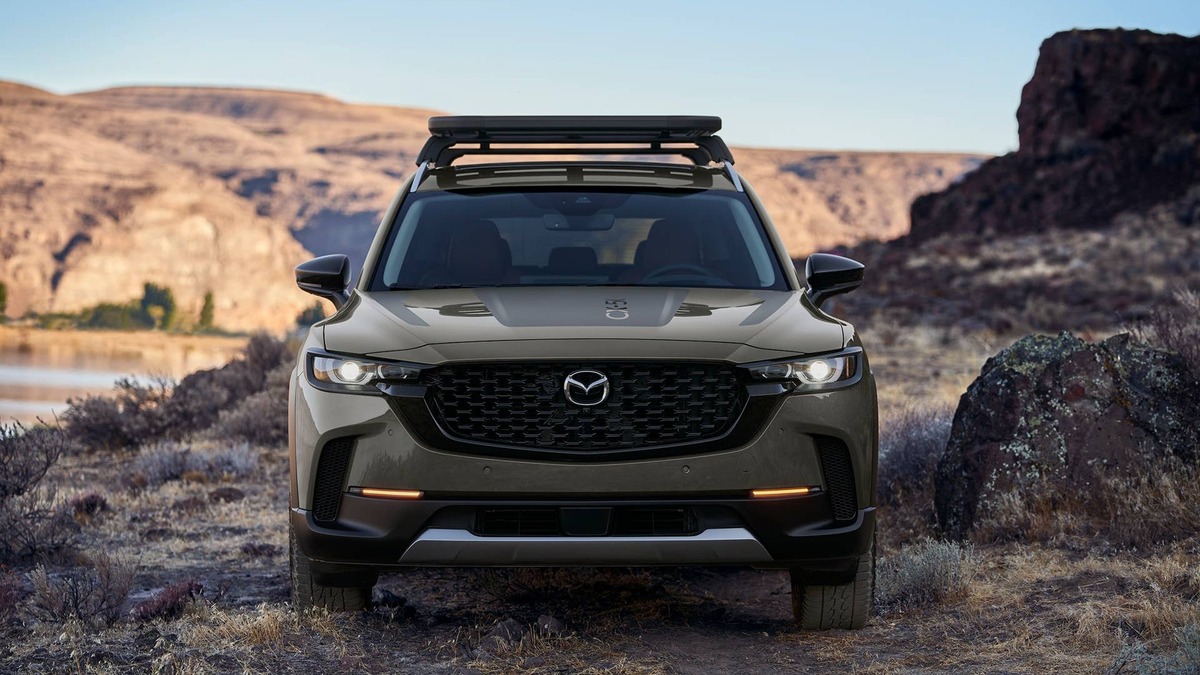
$35,000 now buys a genuinely good compact SUV with a hybrid and all-wheel drive, and two of the best land right at that mark. The 2026 Mazda CX-50 Hybrid starts at $34,750 and the redesigned Subaru Forester Hybrid at $34,995, so they are effectively priced the same. But they chase very different buyers. The Mazda leans premium and sporty; the Subaru leans rugged and practical. We compared them to see which makes the stronger case for your $35,000, and the Mazda edges it, though the Subaru has a clear lane of its own.
Read more This Short-Lived Volkswagen Earned Over 250 MPG
Two takes on the compact SUV
The CX-50 is Mazda’s outdoorsy compact, lower and sleeker than most rivals, with a focus on driving engagement and cabin quality. Its hybrid pairs a 2.5-liter four with electric motors for a combined 219 horsepower, and non-hybrid versions offer a 187-horsepower base engine or a punchy 256-horsepower turbo. It looks and feels a cut above its price.
The Forester is Subaru’s boxy, upright everyman, built on visibility, space and go-anywhere confidence. Redesigned recently, it now offers a hybrid making 194 horsepower alongside its 180-horsepower gas engine, both with the standard all-wheel drive and generous ground clearance Subaru buyers expect. It is the sensible, rugged choice.
Specs and pricing
|
Specification |
Mazda CX-50 Hybrid |
Subaru Forester Hybrid |
|---|---|---|
|
Base price (incl. destination) |
$34,750 |
$34,995 |
|
Powertrain |
2.5L hybrid, 219 hp |
2.5L hybrid, 194 hp |
|
Drivetrain |
Standard all-wheel drive |
Standard all-wheel drive |
|
EPA combined |
Near 38 mpg |
Near 35 mpg |
|
Cargo, max |
56.3 cu ft |
74.4 cu ft |
|
Ground clearance |
8.6 in |
8.7 in |
|
Fuel |
Regular |
Regular |
|
Basic warranty |
3 yr / 36,000 mi |
3 yr / 36,000 mi |
Configure and compare on each brand’s site: the Mazda CX-50 and the Subaru Forester.
Where the CX-50 makes its case
The Mazda’s pitch is that you give up nothing on paper and gain plenty in feel. Its hybrid makes 219 horsepower to the Forester Hybrid’s 194, so it is the quicker of the two, and it is also more efficient, returning near 38 mpg combined to the Forester’s 35. Getting more power and better fuel economy at the same price is a rare combination, and it is the heart of the CX-50’s argument.
Beyond the numbers, the CX-50 simply feels more expensive. Its cabin uses richer materials and a more elegant design, it comes with more standard features including additional speakers, and it drives with a composed, engaging quality that makes it one of the better-handling compact SUVs at any price. For a buyer who wants their $35,000 to feel like more, the Mazda delivers a premium experience the Subaru does not match.
Where the Forester makes its case
The Forester answers with the practical virtues that made it a staple. It is far roomier, offering up to 74.4 cubic feet of maximum cargo space to the CX-50’s 56.3, a big advantage for anyone who hauls gear, and its tall, boxy body delivers excellent visibility and easy access. Its slightly higher ground clearance, standard all-wheel drive, and available rugged Wilderness trim make it the more capable choice on rough roads and light trails.
Subaru also brings a strong reputation for safety and dependability, and the Forester’s upright shape is simply more useful for family duty. Where the CX-50 asks you to prioritize style and driving feel, the Forester asks you to prioritize space, visibility and capability, and for a lot of buyers, especially outdoorsy ones, that is the more compelling pitch.
Technology and features
Both cabins are well-equipped for the money, with different emphases. The CX-50 leans premium, offering a crisp central display, an available Bose audio system with more speakers than the Subaru, standard rain-sensing wipers, and Mazda’s full i-Activsense safety suite across the range. Its interface is clean and its controls feel upscale, matching the sporty-premium character of the rest of the car.
The redesigned Forester counters with a large portrait-style touchscreen, wireless smartphone integration, and Subaru’s EyeSight driver-assistance suite, now paired with a DriverFocus attention monitor. Its real party trick is visibility: the tall greenhouse and slim pillars make it one of the easiest compact SUVs to see out of, which matters more day to day than any screen size. Give the CX-50 the nod on cabin richness and audio, and the Forester the edge on outward visibility and everyday usability.
Capability and all-wheel drive
Both come with standard all-wheel drive, but they are tuned differently. The Forester uses Subaru’s symmetrical, always-on system paired with X-Mode and generous ground clearance, and its rugged Wilderness trim adds even more capability, making it the more natural choice for snow, dirt roads and light trails. It is the SUV that feels most at home when the pavement ends.
Reliability and ownership
Here the two are closely matched, which is good news either way. Both Subaru and Mazda have earned solid reputations for dependability, and both hold their value well, with Subaru’s loyal following helping the Forester’s resale in particular. Neither is expensive to maintain, and both carry the same three-year, 36,000-mile basic warranty, so there is no coverage advantage to break the tie.
One practical note on fuel: both the CX-50 Hybrid and the Forester run happily on regular gasoline, keeping running costs down, though the CX-50’s optional turbo engine prefers premium for its full output, something to factor in if you skip the hybrid. On the whole, both are inexpensive, low-worry vehicles to own, so ownership costs are unlikely to decide this one; the choice really does come down to the CX-50’s polish and efficiency versus the Forester’s space and capability.
Safety ratings and driver assistance
Both brands built their reputations partly on safety and neither disappoints here, though they get there differently. Subaru fits EyeSight as standard across the Forester range, now paired with a DriverFocus attention monitor that watches for distraction and drowsiness, and Subaru’s system has one of the longest track records in the industry. The Forester’s outstanding outward visibility is itself a safety feature that no electronic aid replicates, since the easiest hazard to avoid is the one you can see coming.
Read more Two-car crash in Victorville leaves one dead, three injured
Mazda’s i-Activsense suite is standard across the CX-50 range and covers the same ground, with Blind Spot Assist and Smart Brake Support front and rear. Mazda has been a consistent high performer in crash testing across its lineup, and the CX-50’s lower, wider stance gives it a stability advantage in emergency manoeuvres that a taller vehicle cannot match.
Neither buyer is compromising. The distinction worth drawing is that the Forester’s advantage is passive, in how much you can see, while the Mazda’s is dynamic, in how the vehicle behaves when asked to change direction quickly.
Trim walk: where the money goes
Both ranges reward shopping carefully rather than defaulting to the base car. On the Mazda side, the hybrid arrives already well equipped and the walk up the range buys cabin richness rather than capability, with the Bose audio system and the more elaborate interior treatments concentrated at the top. The turbocharged non-hybrid is the outlier worth knowing about: it delivers 256 horsepower and a 3,500-pound towing rating, comfortably beating anything in the Forester range, but it prefers premium fuel for full output and gives up the hybrid’s efficiency entirely.
On the Subaru side, the meaningful decision is whether to reach for the Wilderness trim, which adds the ground clearance, tyres and hardware that make the Forester genuinely capable rather than merely confident. That version is the one that justifies the Forester’s rugged reputation, and buyers drawn to the Subaru for capability rather than space should price it specifically rather than assuming the standard car delivers the same thing.
Living with them day to day
Specification sheets miss the things owners notice in the first month, and these two diverge sharply on exactly those points.
The Forester’s tall, upright body makes it markedly easier to get into and out of, particularly for older passengers or anyone fitting a child seat, and the square door apertures and high roofline mean less bending and fewer knocked heads. Loading the boot is easier too, because the opening is tall and the floor is low. These are unglamorous advantages that compound over years of ownership.
Scorecard
|
Category |
Winner |
Why |
|---|---|---|
|
Power |
Mazda CX-50 |
219 hp to the Forester’s 194 |
|
Fuel economy |
Mazda CX-50 |
Near 38 mpg to the Forester’s 35 |
|
Cabin quality |
Mazda CX-50 |
Richer materials and design |
|
Driving engagement |
Mazda CX-50 |
Sharper, more composed handling |
|
Cargo and space |
Subaru Forester |
74.4 cu ft max to the CX-50’s 56.3 |
|
Ground clearance and capability |
Subaru Forester |
Higher clearance, Wilderness trim |
|
Visibility |
Subaru Forester |
Tall, boxy body and big windows |
|
Reputation for safety and dependability |
Subaru Forester |
A long, trusted track record |
The tally comes out four to four, which captures the split: the Mazda wins power, efficiency and refinement, the Subaru wins space, capability and reputation.
So which makes the stronger case?
For most buyers, the Mazda CX-50 Hybrid makes the stronger case for $35,000, and the reason is that it wins the head-to-head on the two numbers you might expect to trade off against each other. It is both more powerful and more fuel efficient than the Forester Hybrid, and it wraps that in a cabin and a driving experience that feel a class above the price. Getting more performance, better economy and a nicer place to sit for the same money is a genuinely strong value argument, and it is why the Mazda edges this.
That said, the Forester makes a compelling case of its own for a specific buyer, and it is not a consolation prize. If you value maximum cargo space, better visibility, extra ground clearance, and Subaru’s rugged, dependable reputation over outright power and polish, the Forester is the smarter $35,000. Choose the CX-50 Hybrid for the more premium, efficient and engaging package, which suits most shoppers, and the Forester for the roomier, more capable, more outdoorsy one. Both are excellent at the price; the Mazda simply asks you to give up less to get more. For related reads, see our comparisons of the Mazda CX-50 and Toyota RAV4 and the Honda HR-V and Toyota Corolla Cross.
Frequently asked questions
Which is more fuel efficient?
The Mazda CX-50 Hybrid, at near 38 mpg combined to the Forester Hybrid’s 35, and it delivers that while also making more power, an unusual combination in this class.
Which has more cargo space?
The Subaru Forester, with up to 74.4 cubic feet of maximum cargo space to the CX-50’s 56.3. Its boxy, upright body makes it the more practical hauler for families and gear.
Which is more capable off-road?
The Forester, thanks to slightly higher ground clearance, standard all-wheel drive, and an available rugged Wilderness trim. The CX-50 is capable too, especially in turbo form, but the Forester is the more natural light-trail companion.
Which is the better value at $35,000?
For most buyers, the CX-50 Hybrid, which offers more power, better fuel economy and a more premium cabin for the same money. The Forester is the better value for those who prioritize space, visibility and rugged capability..
Read more Warren Buffett’s Berkshire raises stake in Delta Air Lines
Copyright 2026 The Arena Group, Inc. All Rights Reserved
This story was originally published August 16, 2026 at 11:30 AM.