 By admin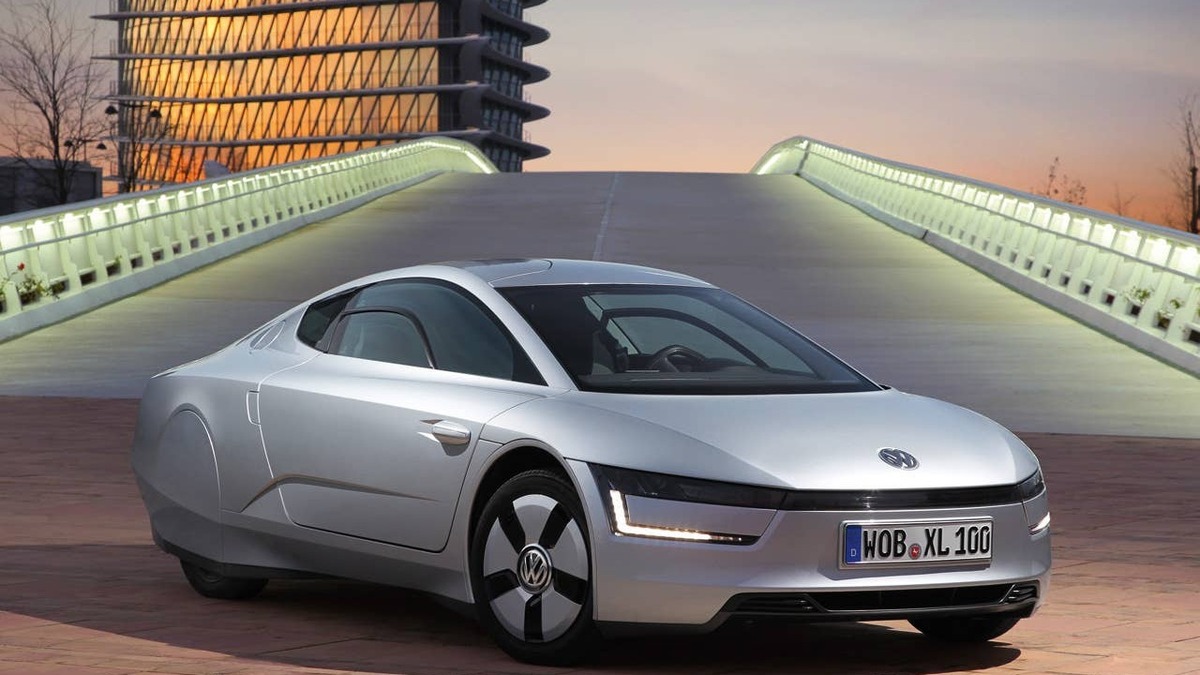
Volkswagen is no stranger to radical projects, and the XL1 serves as the perfect example of what happens when ambition meets German engineering. The car was designed around pushing the limits of fuel efficiency to the extreme, and in that sense, it succeeded. Produced between 2014 and 2016, the XL1 combined a lightweight, aerodynamic body with a small, but highly efficient engine. Just 200 examples of the VW XL1 left the facility, but poor timing and the cost to produce such a vehicle proved to be its downfall.
Read more Two-car crash in Victorville leaves one dead, three injured
A simple idea becomes reality
The mind behind the idea that ultimately became the Volkswagen XL1, also known as the VW 1-liter car, was none other than Ferdinand Piëch, grandson of Ferdinand Porsche. While he got his start at Porsche, he eventually moved on to Audi, where he played a key role in bringing the marque up to par with other German automakers. He also influenced the design and engineering of several iconic vehicles, including the Porsche 911 and Bugatti Veyron.
Piëch’s idea was simple: create a car that could travel up to 100 km on a single liter of diesel. In 2002, his idea became reality when he drove an early version of the XL1 from Wolfsburg to Hamburg to attend the annual shareholders meeting. The official lab-tested fuel economy rates the production version of the XL1 between 261 and 313 mpg, although real-world driving is likely lower. Not only that, but it was also capable of traveling up to 31 miles on electricity alone.
The XL1 came powered by a 0.8-liter turbodiesel two-cylinder engine paired with an electric motor. Notably, the engine was located in the rear and came mated to a specialized seven-speed dual-clutch automatic transmission that sent power to the rear wheels. Naturally, the plug-in hybrid two seater is far from quick, with a combined output of just 68 horsepower and 100 lb-ft of torque. Fortunately, the XL1 weighed just 1,753 lbs., allowing it to accelerate to 62 mph in around 12 seconds
An intricate aerodynamic design
While the Volkswagen XL1’s engine is worth studying on its own, the real story lies in the vehicle’s design. The German automaker took every opportunity to maximize aerodynamics while keeping the car’s weight on the low end. Not only that, but every effort was made to eliminate unnecessary energy consumption.
The XL1 was designed for function above all else, which puts a damper on its practicality. Batteries located in front of the passenger’s feet required the seats to sit in a staggered position. The rear wheels, which featured narrow tires, were enclosed to minimize drag, and the conventional side mirrors were replaced by camera-based alternatives. The doors also opened upwards. The end result was a production model with an impressively low 0.189 drag coefficient, nearly half that of the Bugatti Veyron’s 0.36 drag coefficient.
Built by hand at the Volkswagen facility in Osnabrück, the XL1’s body was made of a carbon-fiber-reinforced polymer monocoque. That same material was used in the exterior panels and structural components as well. On the bright side, the VW XL1 measured in at just 45 inches tall and 65.5 inches wide.
Read more Warren Buffett’s Berkshire raises stake in Delta Air Lines
Due to the materials and components required to create such a lightweight vehicle, Volkswagen XL1’s production process required hands-on precision. The monocoques were first produced in Austria, then shipped to Osnabrück. There, nearly every aspect of the car required some sort of alternative method or dedicated tooling. Components had to be glued instead of welded, and the doors couldn’t be hammered like a steel panel.
There’s some debate about just how many examples of the XL1 were produced. At launch, Volkswagen claimed the model would get a 250-unit production run, but the automaker’s official records indicate 200 examples rolled out of the facility. The XL1 was sold exclusively in Europe at a starting price of €111,000, which converts to roughly $128,500 today.
End of production
The Volkswagen XL1’s timing couldn’t have been worse. The infamous Dieselgate scandal made headlines in 2015 and permanently shifted how the German automaker approached diesel technology. While the XL1 utilized a highly-efficient diesel engine as a part of the plug-in hybrid system, it ultimately fell victim to the automaker’s shift in strategy.
Notably, the XL1 was always meant to be a limited-production vehicle due to the nature of the model itself. The lightweight design and specialized components required hands-on manufacturing, but the expense of it all may have been the real issue. Volkswagen invested over $1 billion in the research, development, and engineering of the XL1, meaning the automaker essentially sold it for pennies on the dollar. The sheer expense and manufacturing process of the vehicle also meant it could never become more than a low-volume model.
Final thoughts
Oddly enough, one could consider the XL1 a bridge between efficient diesel technology and the shift to full electrification. Dieselgate soured public perception of diesel engines, and Volkswagen had to change strategies. As a result, the automaker pivoted towards full electrification which led to the modern-day ID. series. Since its discontinuation, many of the lessons learned and systems demonstrated by the XL1 have been implemented in other Volkswagen Group vehicles. At the end of the day, the Volkswagen XL1 was an ambitious project that bore fruit, and while the story of the model itself ends there, its influence lives on.
Read more Imagination To Stand At Mountain View Farm In 2027
Copyright 2026 The Arena Group, Inc. All Rights Reserved.
This story was originally published August 16, 2026 at 11:00 AM.