 By admin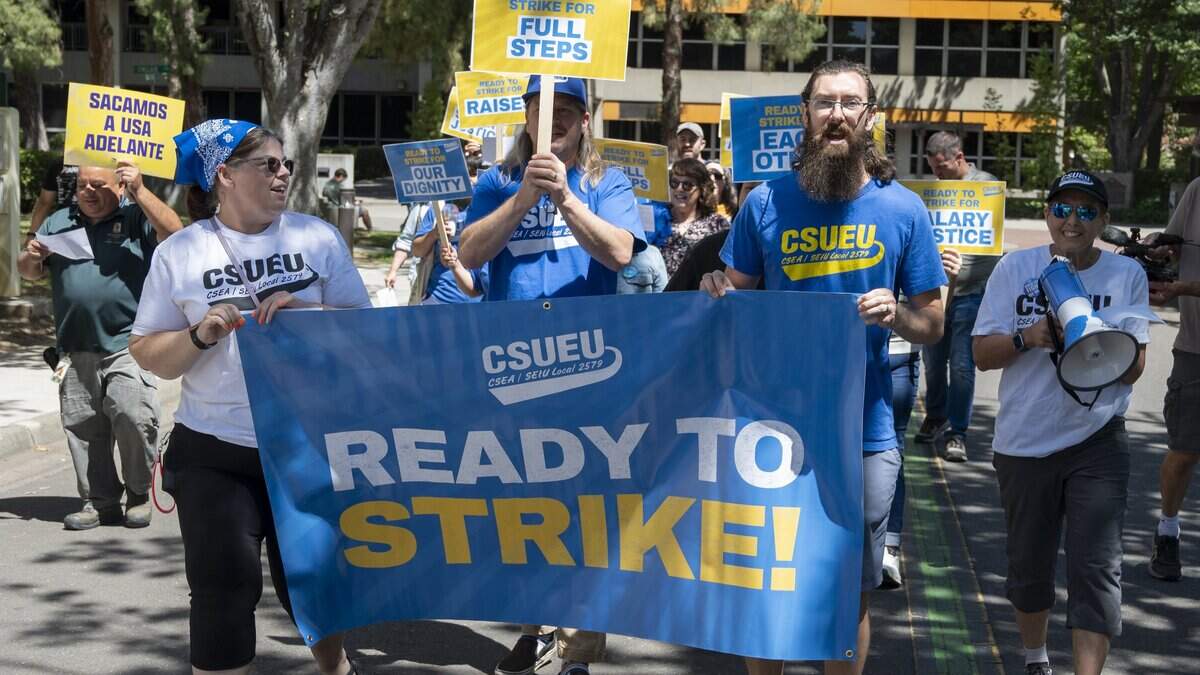
As labor groups negotiate with the California State University for better pay, the higher education system released a study that concluded total compensation for its staff and faculty was competitive with comparable employers and institutions. Unconvinced, the unions said the findings did not reflect reality and were based on “selective facts” and the “appearance of fairness.”
Read more At Padilla roundtable, California nonprofits warn of federal funding uncertainty
As part of a comprehensive review, the CSU commissioned human resources consulting firm, the Segal Group, to study compensation across all employee groups. The system’s goal, it said, was to use this data to ensure its employees are paid equitably, and it is able to recruit and retain talent.
A study of executive compensation released in the winter found that the CSU’s top leadership were paid less than what comparable public universities were for similar roles. This led to increases in base salaries between 4% and 20% for several CSU executives in November and January. Now, the second phase of the review focused on union-represented instructional faculty and staff and found their base salaries on average were slightly below the market rate. But strong benefits packages made the total compensation a little higher than the median for peer institutions. The next and final phase will study pay packages for counselors, librarians and non-represented staff.
“It’s a sham. The study presents itself as objectively true, yet it relies on selective facts and the appearance of fairness,” said California Faculty Association leaders in a statement. “The study is not about us and not for us. Its purpose is to cut us down and silence us for demanding to be fairly compensated for our labor.”
The California Faculty Association, which represents 29,000 lecturers, professors, librarians, counselors and coaches in the 22-campus system, declared an impasse in its negotiations for a new contract with the CSU in July. This means the bargaining process will now be mediated by a state-appointed third party, indicating growing tension in the relationship.
For CFA, the major point of contention over the monthslong negotiations has been what it calls “weak and flimsy” salary proposals from the CSU despite a strong budget from the state this year. In July, the CSU offered the union a 3% salary increase and 3% one-time bonus. The CFA is demanding a minimum salary of $79,500 — 10% of Chancellor Mildred García’s annual base salary of $795,000 — and annual cost-of-living adjustments.
CFA said the CSU’s new study does not take into account the higher cost of living in California when comparing salaries with public university employees nationwide. It also objected to the study’s omission of comparison with the California Community College system, where it says faculty in some places earn more than at neighboring CSU campuses. This, the union said, was a “tell-tale sign” that the study was manipulated to fit the CSU management’s narrative.
The CSU said it excluded community colleges in its comparison to focus on four-year universities in the study. Further, it said it accounted for geographic differences by using cost-of-labor adjustments instead of measuring cost of living. These adjustments reflect differences in market wages employers pay for similar jobs across geographic labor markets. Each CSU campus was grouped into a tier based on its local labor costs. The campuses in the highest labor costs tier offered the least competitive base salaries, the study found. This included San Jose State, Cal State East Bay and San Francisco State.
Read more Police investigate deadly crash involving motorcycle and SUV in Elk Grove
CSU Employees Union, which represents 36,000 staff and student workers, also took issue with the CSU’s new study but with a different approach. Although the CSUEU did not object to the study’s methodology, it disagreed with the major takeaway.
“CSU leadership claims its latest salary study shows staff and faculty pay is competitive with comparable employers and peer institutions. Our assessment is vastly different,” the union said in an update on its website. “The study by Segal does not say CSUEU wages are at market; it says CSUEU base wages are 4% below market.”
For staff, the study found that base salaries were slightly below the market median for higher education institutions and about 10% below the general industry standard. In addition, it found salaries were less competitive for staff at lower pay levels, which make up about 75% of the studied workforce. Two-third were below market median, the study said. Still, it said most employees remained within the “competitive range,” which it described as between 85% to 115% of the market median.
The study said compensation increases for CSU faculty and staff over the past few years had allowed the system to maintain competitive salaries for instructional faculty and improve relative pay levels for staff since previous studies were conducted in 2022 and 2023. The 2022 study had found that the CSU system was failing to keep up with institutions nationwide across higher education in staff pay. It recommended that the system create a step-salary structure based on job levels, market data and geographic adjustments to recognize tenure, expertise and performance. It also said salaries should increase annually by more than 3% to remain competitive with the market.
According to CSUEU, the CSU system’s latest bargaining proposal included a “lousy 1% wage increase.” Amid tense negotiations, the union has warned that it is ready to strike and has already begun conducting practice pickets at individual campuses.
“We are not bargaining to sit within 15% of market,” CSUEU Vice President Jessica Dalton said. “We’re bargaining to reach market and stay there. The data shows we’re behind. The bargaining history shows collective action is what moves us forward. And a 1% proposal — one that doesn’t touch step progression at all — shows CSU isn’t yet serious about finishing the job it documented itself.”
Read more CDCR: Inmate dies after attack stopped by guards at Sacramento County prison
This story was originally published August 18, 2026 at 5:28 PM.