 By admin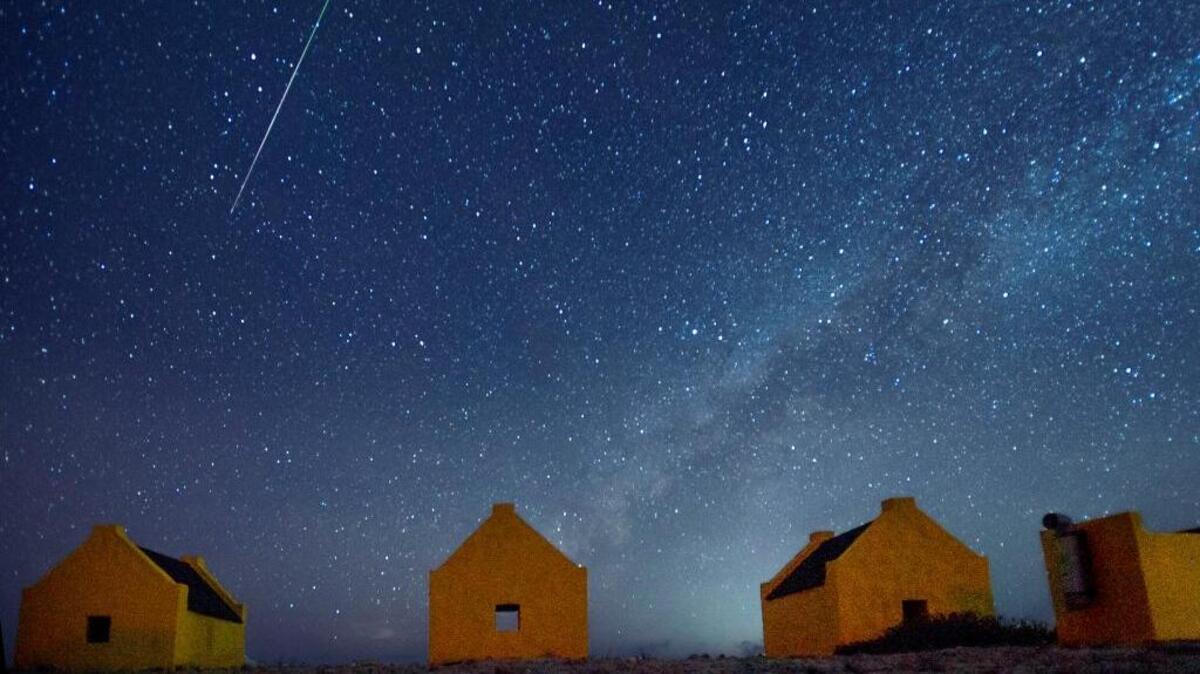
California sky watchers are gearing up for the best meteor shower of the year.
August brings the peak of the Perseid meteor shower, known for its plentiful shooting stars and explosive fireballs.
Read more What is the Transfer Success Pathway program? CSU opens applications Aug. 1
Stargazers in California can also catch glimpses of a partial lunar eclipse, planets and the sturgeon full moon.
How to see ‘dueling’ meteor showers in July
Shortly after July’s full moon reaches peak illumination, Californians can enjoy “dueling meteor showers,” according to AccuWeather.
The Southern Delta Quariids and Alpha Capricornids will peak at the same time on the night of Thursday, July 30. with the light show continuing into the morning.
“Typically, the pair can combine for up to 30 meteors per hour,” AccuWeather said. “This year, though, the bright moonlight will wash out many of the fainter meteors.”
Which planets are visible in the night sky in August?
Mercury will be at its farthest distance from the sun on Sunday, Aug. 2, according to astronomy website EarthSky.
For the best view, look in the direction of the sunrise as the sky is getting lighter. The planet will appear low in the sky.
Mercury will have a “close encounter” with Jupiter on Saturday, Aug. 15, EarthSky said.
Venus will reach its greatest distance from the sun on Aug. 15.
“Earth’s brightest neighboring planet will be shining in the western twilight after sunset,” EarthSky said. “You can’t miss Venus! It’s exceedingly bright and will penetrate the bright twilight.”
When to watch Perseid meteor shower in 2026
Considered the “best meteor shower of the year,” the Perseid meteor shower is also the most popular, according to NASA.
“With swift and bright meteors, Perseids frequently leave long ‘wakes’ of light and color behind them as they streak through Earth’s atmosphere,” the space agency said.
The meteor shower produces up to 50 to 100 meteors per hour.
“They occur with warm summer nighttime weather, allowing sky watchers to comfortably view them, NASA said.
Read more Sacramento area among only 95 test markets in US for Jamba’s new sandwich melts
The Perseid meteor shower is also known for its fireballs — explosions of light and color that last longer than a typical meteor streak.
Although the Perseids are active until Monday, Aug. 24, the meteor shower reaches its peak on Wednesday, Aug. 12, and Thursday, Aug. 13, according to the American Meteor Society.
“In 2026, the moon is new on Aug. 12, so conditions are optimum for viewing this shower,” the society said.
In the Northern Hemisphere, the best times to view the Perseids are during the pre-dawn hours, NASA said.
When is the next full moon in 2026?
August’s full moon will reach peak illumination at 9:19 p.m. on Thursday, Aug. 27, according to online clock Time and Date.
Why is August’s full moon called the sturgeon moon?
August’s full moon is known as the sturgeon moon due to the “abundance” of fish that could be easily caught in the Great Lakes at this time of year, according to the Old Farmer’s Almanac.
Sturgeon were an “important food staple for Native Americans,” the almanac said.
Is there a partial lunar eclipse in August?
A partial lunar eclipse will occur around 9:12 p.m. on Aug. 27, according to Space.com.
North and South America will have the best views of the blood-red moon.
“Viewing conditions will depend on the local weather, with western U.S. states, northern Chile and inland Brazil statistically offering the best odds of clear skies,” Space.com said.
As the full moon passes into Earth’s umbral shadow, it will dim and “look slightly reddish-orange,” Space.com said. “However, it won’t be a true “blood moon“ because at no point will there be lunar totality — when the entire lunar surface falls under Earth’s shadow.”
Where are the best places to stargaze?
For the best views of shooting stars, planets and more, head away from the city. The ideal stargazing locations offer “unobstructed views of the horizon,” National Geographic said. “Mountains, moorlands, deserts and remote islands are good choices, thanks to their isolation, clear conditions and lack of light pollution.”
This story was originally published July 29, 2026 at 5:00 AM with the headline “‘Best meteor shower of the year’ to light up CA sky. Here are best times to watch.”
Read more Federal civil rights probe targets Tulare school district over misconduct. What to know