 By admin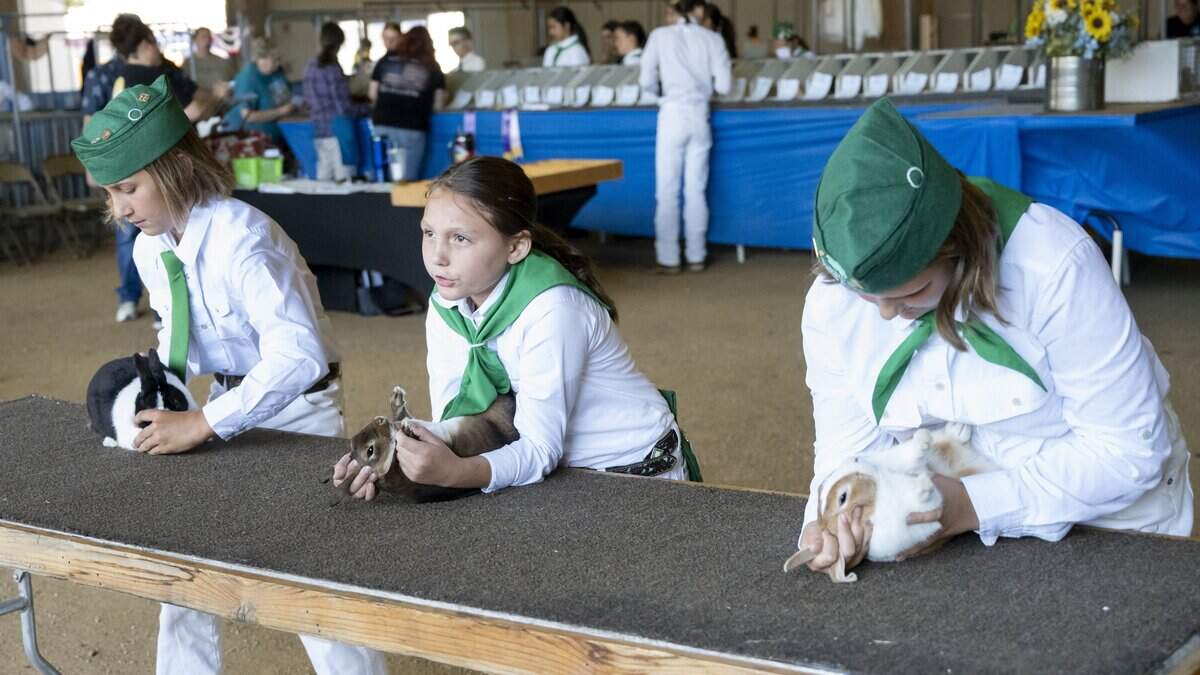
Amid a sea of young children brushing fluffy guinea pigs and wrangling bunnies, 13-year-old Cole Kennedy expertly flipped his rabbit over, holding it in place while his friend carefully trimmed its nails.
Read more Child severely injured in ATV crash, airlifted from Oceano Dunes
Kennedy was readying the furry animal to compete against other Dutch rabbits in the California State Fair’s “best in breed” competition.
“They’re usually chill breeds,” he told The Sacramento Bee. “My little man right here, he’s not that chill, but you usually get more chill breeds with Dutch.”
Next to him, Abby Wilmot, a 4-H ambassador for Yolo County, gestured to one of her own rabbits. “He’s chaotic. He has a lot of nervousness, so you can tell it, he’ll stomp or he’ll chew,” said the 16-year-old. “But he’s a great show rabbit.”
Livestock pens and bustling stalls of sheep, goats and cows are ubiquitous at state and county fairs, in a tradition that dates back to the earliest American fairs. Organized by agricultural societies, fairs were a celebration of a region’s livestock and crops, according to the International Association of Fairs & Expositions.
Those early events focused on larger animals, such as cattle, horses and sheep.
Nowadays, small animals also get the spotlight.
On Wednesday, children spoke with The Bee while they prepared their guinea pigs and rabbits for the judges’ eyes.
They were brutally honest about their animals’ shortcomings.
“You want their nose to be round and hers is a little bit spiky and pointy,” said Abigaill Fellion, 13, of her guinea pig Oreo. “So that’s something that if I were to breed her, I’d bring her to a boar (male) that has a better nose.”
Gavin Levings-Dick offered a more positive assessment of his red Thrianta rabbit, who had just been awarded best in breed.
“She has a very nice round body type, which is what you want in this breed. She has pretty chubby cheeks,” said the ten-year-old. “Coats are pretty much as good as you can get for this time of year.”
Read more DOJ drops union president’s charges in 2025 Los Angeles ICE protest arrest
Other competitors got ready to face off in the showmanship competition. A test of animal knowledge, public speaking and handling, the contest requires participants to give a physical assessment of their animal, from floppy ears to fluffy tail, for a judge.
Elite showmanship competitors have been at it for years.
Sophia Adair, 17, started showing small animals when she was ten. She’d already cleaned up at the Sacramento County Fair, and had an ornate belt buckle to prove it.
At that fair, she took the top showman award for rabbits, guinea pigs and pygmy goats. After that, she won the competition pairing the top showman from each small animal category against other competitors.
Hitting the books regularly, she told The Bee, is the only way to achieve this level of success. She has studied at least once a week since she started competing – seven years ago. Competitors study ethics, animal well-being, nutrition and breed standards, for example.
“A lot of times, people just kind of wait until the last minute to get that studying in, but that’s not going to help,” she said. “All of us here are really great showmen. But it’s going to come down to what we know.”
All that work hasn’t diminished her love of rabbits, which flourished at an early age.
“When I was 5 years old, I asked for a rabbit for my birthday, and my parents said no, but my grandma said yes,” Asair said. “I got that rabbit, and I was like, this is the best thing in the world.”
“Every single year, we would go to the county fair and state fair,” she recounted. “I would leave my parents to go watch everyone show their animals. And then when I was 10 years old, my parents were like, okay, let’s do this.”
Read more Making history with the California State Fair’s First Peoples Art Showcase