 By admin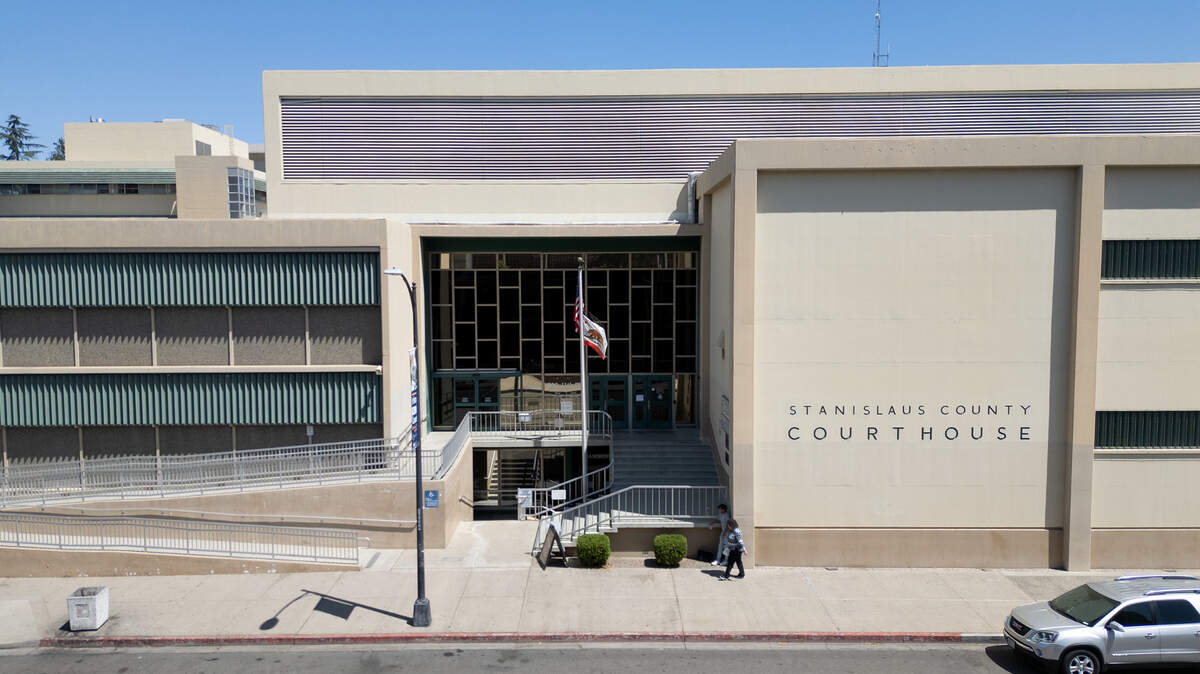
Attorney Matthew Begoun had just arrived at the Stanislaus County Superior Courthouse with his client, the man’s wife and their infant child when four plainclothes federal immigration agents appeared.
Read more Becerra opposes voter ID and billionaire tax, stays neutral on most propositions
The hearing July 22 was expected to be routine. Begoun’s client, 23-year-old Eduardo Mijail Gallegos Jaimes, had posted bail after being arrested on two misdemeanor charges and voluntarily returned to court for a scheduled hearing.
Instead of appearing before a judge, Begoun said, Gallegos Jaimes was taken into federal immigration custody before his criminal case could proceed.
“I was stunned,” Begoun said. “He showed up to court, and before he could appear before the judge, ICE had him.”
The arrest is one of at least two known instances this month in which U.S. Immigration and Customs Enforcement detained criminal defendants at the Stanislaus County courthouse before scheduled hearings. The actions are part of what attorneys, prosecutors and court officials describe as renewed courthouse immigration enforcement that is raising questions about court access, public safety and the administration of justice.
Since California courts began tracking civil arrests at courthouses June 1 under a new statewide reporting rule, Stanislaus County Superior Court has reported seven — all made by ICE, Court Executive Officer Hugh Swift told The Bee.
Court officials say they did not previously track such arrests.
Two courthouse arrests in two weeks
Gallegos Jaimes’ arrest came less than two weeks after another defendant, Sergio Daniel Cerpas Garcia, was taken into ICE custody outside a Stanislaus County courtroom before he could be arraigned on charges of child molestation.
Cerpas Garcia’s attorney, Hector Alvarez, argued the detention prevented his client from appearing in court, and he plans to challenge the circumstances surrounding the arrest under California’s Racial Justice Act.
Begoun described a similar disruption in his own case.
He said Gallegos Jaimes had posted bail, voluntarily appeared for his hearing with his family and was waiting inside the courthouse when four ICE agents approached.
Begoun followed the agents out of the courthouse basement, where he briefly spoke with one of them before his client was taken away.
Inside the courtroom, Begoun told the judge and prosecutor what had happened and argued his client had not willfully failed to appear.
To maintain jurisdiction over the case, the court issued a bench warrant for his client, Begoun said.
“It cuts against the very goal of the system, which is people showing up,” Begoun said. “People should be encouraged to come to court and not be in fear that they’re going to be removed by federal agents.”
ICE defends courthouse arrests
ICE confirmed arresting Gallegos Jaimes on July 22 at the Stanislaus County Superior Court in Modesto.
The agency identified him as a Mexican citizen who was in the country illegally and said he has prior convictions involving sexual offenses against a minor, including sending harmful material to seduce a minor, unlawful sexual intercourse with a minor and oral copulation with a person under 18.
Gallegos Jaimes is currently charged in Stanislaus County with unlawful sexual intercourse and oral copulation with a person under 18. Prosecutors filed the case as misdemeanors. Defense attorney Matthew Begoun said prosecutors had discretion to pursue felony charges but instead elected to file misdemeanors based on the circumstances of the case.
The Bee was not able to independently verify ICE’s assertion that Gallegos Jaimes has prior convictions involving sexual offenses against a minor. A Stanislaus County Probation Department pretrial assessment prepared for his release review indicated he had no prior misdemeanor or felony convictions.
Begoun likewise disputed ICE’s characterization, saying on the record that his client has “no convictions for any sex-related crimes or anything like that” and “no real criminal history.” ICE did not respond to follow-up questions seeking clarification or documentation supporting its statement before publication.
Gallegos Jaimes remains in ICE custody while his immigration case proceeds, according to the agency.
In a statement to The Bee, ICE said officers may conduct enforcement actions in public places, including courthouses, as part of enforcing federal immigration law.
“The ability of law enforcement to make arrests of criminal illegal aliens in courthouses is common sense,” the agency said. “It conserves valuable law enforcement resources because they already know where a target will be. It is also safer for our officers and the community.”
The agency added that it will continue making arrests at courthouses and nearby public areas “as appropriate.”
Attorneys warn of broader consequences
Immigration attorney Patrick Kolasinski, who has represented clients in ICE enforcement cases, said courthouse arrests can have consequences beyond the defendants themselves.
Read more UC Davis transportation research center faces uncertainty following Trump grant cuts
He said people may become reluctant to report crimes, testify in court or cooperate with prosecutors if they fear immigration enforcement.
University of California Davis law professor Kevin Johnson said ICE has long viewed courthouses as efficient places to locate people because defendants are required to appear there.
“It’s like shooting fish in a barrel,” he said.
But Johnson said courthouse enforcement can discourage participation throughout the justice system. “It’s not just defendants,” he said. “Witnesses and crime victims also may be afraid of going to court.”
Courts tracking arrests for first time
The Stanislaus County Superior Court declined to discuss the individual cases, citing pending litigation.
However, Swift said the court has reported seven civil arrests since June 1 under California Rule of Court 10.440, which requires trial courts to report civil arrests occurring at or near courthouse facilities.
Swift later confirmed that all seven reported civil arrests involved ICE.
The Judicial Council recently adopted the reporting requirement and is developing a public dashboard expected to launch next month.
Although the court has not implemented additional security or procedural changes in response to the arrests, Swift said its position remains unchanged.
“The court continues to support equal access to justice and recognizes that courthouse enforcement activity may discourage some individuals from accessing court services or participating in judicial proceedings,” he said.
Prosecutors: Cases can be delayed
Chief Deputy District Attorney Wendell Emerson said courthouse ICE arrests can delay criminal cases when defendants become unavailable but said prosecutors have tools to continue pursuing cases.
“Our office has the ability to have defendants returned from ICE custody to face local charges when appropriate,” Emerson said.
He added that the office routinely supports U-visa applications for undocumented crime victims and witnesses who cooperate with criminal investigations.
Emerson said the District Attorney’s Office has “no involvement with ICE deportation efforts” and has not coordinated with ICE regarding courthouse detentions in Stanislaus County.
“Our goal is to maintain a justice system that is safe, accessible and effective while working constructively with all of our law enforcement partners,” he said.
The Stanislaus County Sheriff’s Office, which provides courthouse security, said it does not interfere with lawful actions by other law enforcement agencies and referred questions about the arrests to ICE.
A growing statewide issue
The courthouse arrests come as California courts begin collecting statewide data on civil immigration arrests for the first time.
The reporting requirement follows years of debate over courthouse immigration enforcement and concerns that such arrests may discourage people from seeking protection through the courts.
California Gov. Gavin Newsom’s office criticized the practice, saying federal immigration agents risk disrupting criminal proceedings before justice can be served.
“If someone commits a serious crime, they should be held accountable in our justice system,” a Newsom spokesperson told The Bee. “If federal immigration agents can disrupt legal proceedings to deport people before justice is served, they are undermining the rule of law.”
Rep. Tom McClintock, R-Elk Grove, took the opposite view, saying he supports ICE conducting enforcement operations inside state courthouses, particularly in jurisdictions that do not honor immigration detainers.
“They strengthen the administration of justice by assuring that our immigration laws are enforced,” McClintock said.
For Begoun, however, the issue is less about politics than what happens inside a courtroom.
His client, he said, did exactly what the justice system asks defendants to do.
“He showed up,” Begoun said. “And before he could even stand before the judge, he was gone.”
Read more Inclusive fitness for kids with developmental disabilities is Carmichael gym’s goal