 By admin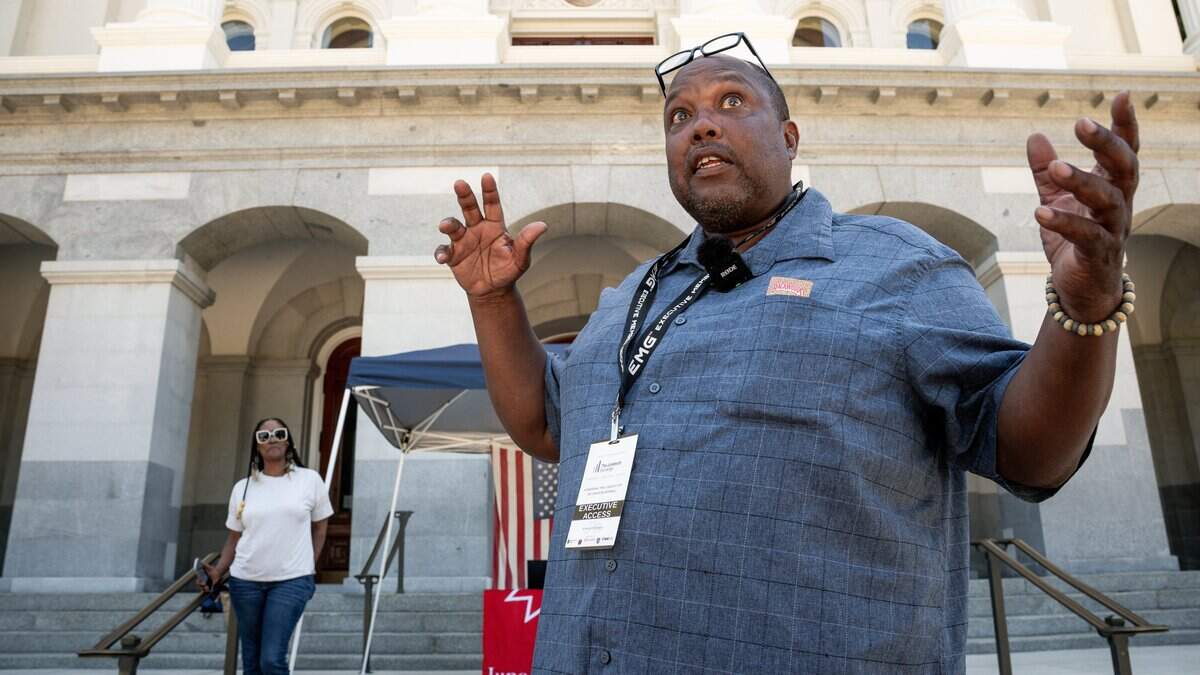
Sacramento calls itself a city of diversity, but walk through its museums or read its history books, and you’ll see who’s missing. Local historian Michael Harris knows it, and now, so do I.
Read more Cockroach infestation forced temporary closure of Sacramento Mexican restaurant
Black people were present at the dawn of California and Sacramento. Some were key figures who have been forgotten by history, which Harris is trying to correct.
He’s dedicated his life to telling their stories, sometimes at poorly attended press conferences where Harris has lamented a lack of media and public attention.
“Unfortunately, here in the community that I was born in, we don’t teach Black history and local Black history,” Harris told The Bee on July 28. Harris’ words made me want to learn more about the Black history of my adopted city and state. I learned that July 28 was Buffalo Soldiers Day, which commemorates the 1866 passage of the Army Organization Act. The law led to the creation of the first Black regiments in the U.S. Army, the Buffalo Soldiers.
These Black men escorted settlers, fought fires, built roads into Yosemite and Sequoia and guarded what would become national parks. They were key to building the infrastructure that enabled settlements in new communities, including Sacramento.
Harris still burns at the memory of only learning by chance that roughly 500 Buffalo Soldiers are buried at San Francisco National Cemetery.
The revelation didn’t feel like a fun fact. It hurt him.
“Part of it was just very upsetting to me,” Harris said. “It made me really want to dig and find out what else, specific to the Buffalo Soldiers, was in California that I didn’t know about.”
The more knowledge he gained, the more it made Harris angry that a kid born and raised in Sacramento, who went through its public schools and wore the Army uniform, could grow up never knowing that Black soldiers had been here all along.
But the Buffalo Soldiers are just one chapter. Sacramento’s rich Black history, Harris believes, still isn’t given its due.
“If you take it in the context of when Sutter’s Fort was created (between 1840 and 1844), it’s a Black story,” Harris said.
Read more 1 arrested after ‘suspicious’ fire at Stockton Boulevard market La Superior
Harris isn’t speaking metaphorically about the first nonindigenous community in Central California that became critical to the history of the Gold Rush, the statehood of California and the establishment of the city of Sacramento.
As Harris tells it, Black workers and dark-skinned Kanaka laborers from Hawaii were central to the construction of Sutter’s Fort and its daily life — from the barrel makers and chefs to the financial backing of William Alexander Leidesdorff, whom Harris calls “the African founding father of California.” Leidesdorff was an Afro-Caribbean businessman credited with, among other things, helping found the city of San Francisco.
Yet, when visitors tour Sutter’s Fort today, this history is largely invisible. For Harris, calling Sutter’s Fort a Black story is a push to add depth to Sacramento’s origin tale — so Black builders, guards, and entrepreneurs are recognized not as footnotes, but as founders.
Harris argues that Sacramento should honor Black history as a continuous, place-based story, not a side note. He envisions a timeline starting when California was still a territory of Mexico, highlighting free people of African descent, Afro-Latino vaqueros, Black whalers, builders, soldiers, business owners and leaders like Pío Pico, the last governor of California under Mexican rule.
Harris wants Sacramento’s Black history to be anchored here: through a first‑class African American museum in the capital and in local institutions such as local libraries, not just folded into state-run systems or Los Angeles-based museums.
It was progress in 2020 when Sacramento County declared racism a public health crisis, and that the city finally recognized Juneteenth as a paid holiday. There’s also the city’s African American Experience project that launched a few years ago.
These gestures should signal a community ready to embrace Black stories, but if Sacramento truly wants to live up to its reputation as a city that values diversity, it must do more than celebrate milestones and pass resolutions.
It must commit to telling the whole story: put Black stories front and center, honor Black builders and ensure that children grow up knowing that Black history is Sacramento’s history, too.
Read more Grocery carts to salad bars: Where aren’t service dogs allowed in California?
Until then, the tapestry of this city’s story will always be incomplete.