 By admin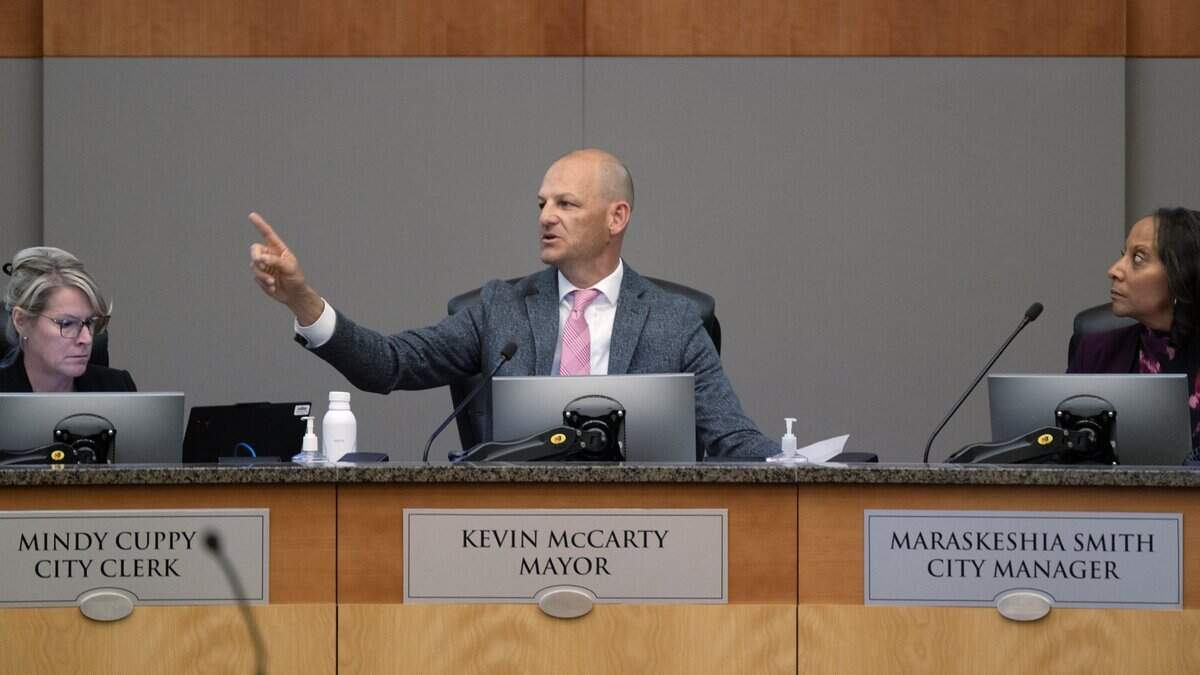
AI-generated summary reviewed by our newsroom.
Read our AI Policy.
- Sacramento City Council voted 5-2 to approve renewing the agreement with CCIC.
- Sac PD said it shares criminal-related intelligence, not personal data.
- The city forwards federal homeland security grant funds to staff CCIC and its projects.
Amid local movements to resist federal immigration enforcement and growing national skepticism about mass surveillance technology, the Sacramento City Council voted Tuesday to continue its partnership with a federal intelligence center.
Read more Political newcomer Eric Jones challenges incumbent Mike Thompson to debates
This is the second time the item has appeared before the City Council. At the same June meeting during which the City Council approved an action plan to restrict city property from being used for federal immigration enforcement, it grappled with the fact that the city currently shares a wealth of information with the federal government — without clarity on how that information is used.
Tuesday it again considered renewing an agreement with a regional federal task force with the stated purpose of combating terrorism. Under the grant, the Sacramento Police Department shares several types of data with the Central California Intelligence Center.
“These federal funds are essential to meeting our regional homeland security obligations and ensuring that Sacramento remains well-prepared to identify, prevent and respond to both criminal and terrorist threats,” Sacramento Police Department Deputy Chief Bryce Heinlein said.
Heinlein said that Sacramento PD and the Sacramento County Sheriff’s Office do not share personally identifying information with any agency for civil immigration enforcement, including the CCIC. He said they only share intelligence related to criminal activity.
‘Lacks meaningful public oversight’
Local activists, who in June disavowed what they called a meaningless city immigration ordinance, emphatically doubted that resident data would not be used in a way that violates California and Sacramento’s sanctuary city laws. They cited reports that show several California law enforcement departments have granted ICE unfettered access to the personal data of drivers.
“This is not simply about accepting federal funding,” Rhonda Rios Kravitz commented. “It is about whether Sacramento will continue participating in a surveillance network that lacks meaningful public oversight and shares information with federal agents, including ICE.”
The group again shut down the meeting with their continued heckling of council members and Sacramento PD representatives.
After returning from a recess, it voted 5-2 to approve the agreement, with Caity Maple and Mai Vang dissenting.
What is a fusion center?
CCIC is in Sacramento and is one of five fusion centers in California. Fusion centers are federally-funded hubs where local and state agencies share intelligence with federal agencies, including the Federal Bureau of Investigation, the National Security Agency and the Department of Homeland Security — which would include Immigrations and Customs Enforcement and Customs and Border Protection.
California fusion centers are currently being audited at the request of State Sen. Sabrina Cervantes, D-Riverside, who said that Californians “deserve to know whether these centers are serving their intended counter-terrorism purpose, or whether they have become unaccountable surveillance infrastructure operating in the shadows of our democracy.”
Last month, Sacramento Police Lt. Dave Putman listed the types of information shared with the fusion center: “Violent crime, gangs, critical infrastructure, public safety threats, terrorism and cyber security.”
Read more Nationally recognized Sacramento cake shop to close in DoCo. What’s next for chef?
Putman did not answer The Sacramento Bee’s question about the specific process by which Sacramento PD shares information with CCIC.
Under the grant agreement, the city acts as a pass-through for federal homeland security funds. It accepts grant money, a portion of which is sent to the county Sheriff’s Office to staff the CCIC.
What does the city get?
The grant funds staff positions for state-approved projects in cybersecurity, combatting domestic violence and enhancing election security — initiatives for which several council members expressed broad support.
In June, many council members expressed concern about the contract for its implications on immigration. Vice Mayor Karina Talamantes requested an “expedited plan” to create guard rails surrounding how information was used. Mayor Pro Tem Eric Guerra echoed this sentiment, saying that “even if our role is a pass-through, we should have a response as to how we are managing that privacy.”
Five council members requested more information about the partnership, but when the item appeared again on the consent agenda (which is typically a way to approve many routine items at once), the only additional information in the staff report was a line about funding and another which said that the city could be at risk of losing current and future grant funding if the agreement is not made.
Neither Mayor Kevin McCarty nor City Manager Maraskeshia Smith, who are in charge of drafting council agendas, responded to The Bee’s question about why the item was again placed on the consent agenda despite council requests for more information and significant community concern.
Talamantes, explaining her “yes” vote, argued that the grant funding was better off under the jurisdiction of a progressive-led Sacramento than another jurisdiction that does not require similar guard rails.
“If the city of Sacramento does not accept these dollars, other agencies who do not have the leadership that we do have here will apply for these dollars, get these dollars, and use these dollars without any of the safeguards that the city of Sacramento has in place today,” she said.
Maple and Vang both remained concerned about how the information residents information would be used.
“We don’t have control over what happens at the center, we don’t have control over what the federal government will do and we certainly don’t have control if there are breaches which we’ve seen already,” Maple said.
In a statement after the vote, Vang lamented the City Council’s decision.
“The approval of this item sacrifices our privacy and further erodes trust of not only our immigrant communities, but ALL Sacramento residents,” she wrote. “The Trump administration is blackmailing local jurisdictions with these false choices to leverage funding — we must have the courage to take a stand.”
Read more Fantasy 5 players win $540,000+ dollars in California. See where tickets sold