 By admin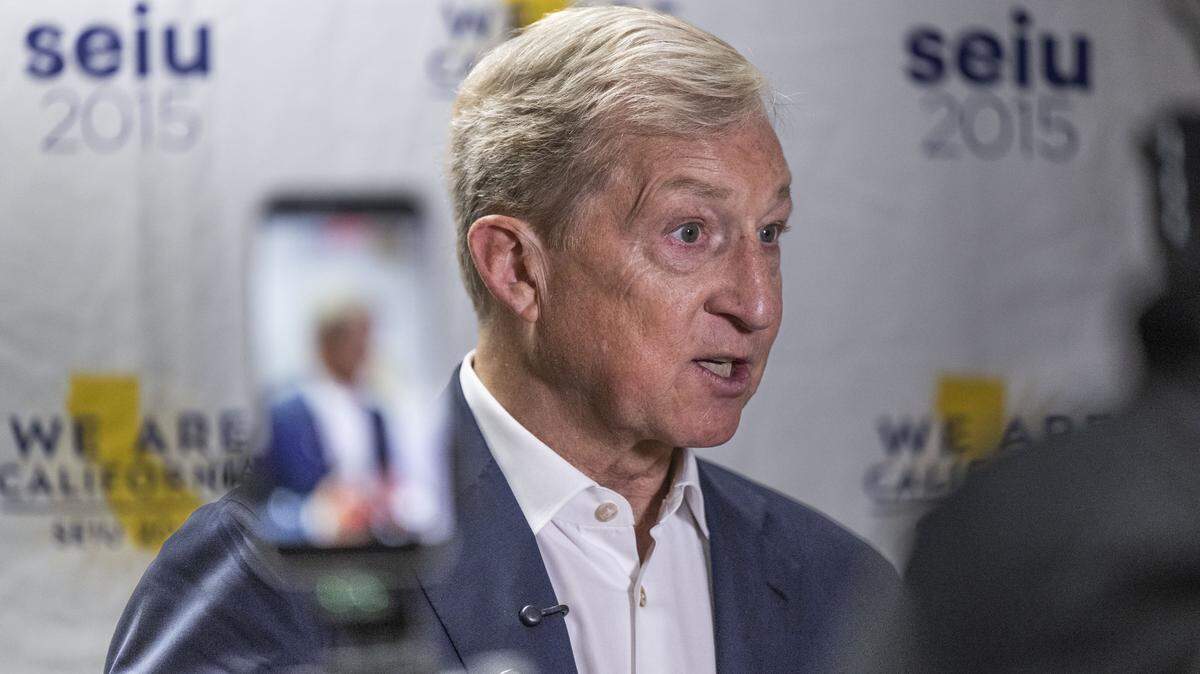
California’s campaign finance agency said Monday it would not fine Democrat Tom Steyer after influencers hired by his unsuccessful campaign for governor failed to disclose they were on the campaign payroll.
Read more Attorneys demand retraction from co-host of ‘The View’ over Nolan Wells remarks
The Sacramento Bee first reported in May that the Steyer campaign paid influencers as little as $10 to boost Steyer’s progressive candidacy — often without disclosing they’d been reimbursed. The campaign later increased some payments to $1,000 a month for supportive videos and posts.
A California law passed in 2023 requires people to disclose when they’ve been paid to support a candidate or ballot initiative online.
The California Fair Political Practices Commission received six complaints about the Steyer campaign’s possible violations of the 2023 law. Five of them were folded into a single investigation involving three influencers who, according to the commission, failed to include disclaimers: Isaiah Washington, Deekololaoluwa Kamson and Eric Cheng.
In a letter dated Monday, FPPC senior counsel Alex Rose said the Steyer campaign had produced evidence showing that it properly instructed the influencers to note that they were paid by the campaign. Rose said the influencers added the disclosures after the campaign discovered that the posts lacked the required disclaimers.
“Because the required disclosure was promptly added, the candidate’s committee fulfilled the initial notification requirement and neither party has a prior history of violations regarding this section, the Enforcement Division is closing this matter without formal administrative action,” Rose wrote.
Earlier this month, the Legislature passed a bill from Assemblymember Marc Berman, D-Menlo Park, closing a loophole in the 2023 law by requiring campaigns — not just influencers — to disclose any payments to influencers. Gov. Gavin Newsom has until Sept. 30 to sign or veto Berman’s bill.
The Steyer campaign paid a mix of big-name influencers — like Carlos Eduardo Espina, who boosted the candidate to his 14 million followers and advised Steyer on Latino issues — and little-known, everyday social media users to boost the campaign. The latter group was generally paid through a digital agency called SideShift, where brands can hire people to create so-called user-generated content.
Read more UNC concludes football investigation as Bill Belichick’s son resigns
In Steyer’s case, that meant a regular drumbeat of posts that echoed the campaign’s talking points, like attacking rival Democrat Xavier Becerra for accepting a campaign contribution from Chevron.
Campaign finance records show that many of the more than 100 influencers paid through SideShift promptly deleted their accounts after the end of the campaign. Others pivoted to posting about other issues, like a self-described “Michigan girl” who deleted her Steyer posts and switched to posting about affordability issues in that state. Another man who backed Steyer — and mispronounced the billionaire’s name — runs another account advising users how to stop “lusting” after women. Neither responded to requests for comment sent via social media.
Steyer finished third in the primary, narrowly losing to Republican Steve Hilton in California’s top-two system. In an interview Friday, the San Francisco financier and environmental activist stood by his campaign’s use of influencers.
“We never paid somebody to endorse us,” Steyer said. “People who worked with us, we paid them for their time. We fully disclosed it. I don’t think we made any mistakes. So I know that people tried to make an issue out of it, but in my mind, we obeyed the letter of the law and dealt with the world the way it is.”
As traditional media’s influence has waned, campaigns across the U.S. have turned to influencers — people who earn money posting content on social media — to reach voters online, as Americans increasingly receive news from platforms like Instagram and TikTok. Unlike traditional TV advertising, there are no federal transparency regulations for how political campaigns pay influencers.
Becerra, who won the primary and holds a large lead in polls for the general election, also received support from several influencers as he and Steyer battled for Democratic voters’ support. After the campaign hired him as a digital strategist, influencer Jordan Gonzalez amended a host of online posts to disclose his affiliation with the former attorney general.
Other pro-Becerra influencers were not paid. They include comedian Maggie Reed, anti-plastics activist Beatrice Gomberg and politics content creator Kaitlyn Hennessey. Gomberg and Hennessey filed a joint complaint against the Steyer campaign, which the FPPC folded into its investigation.
Read more From political campaigns to inclusion manager, Zaire Harris’ passion drives her