 By admin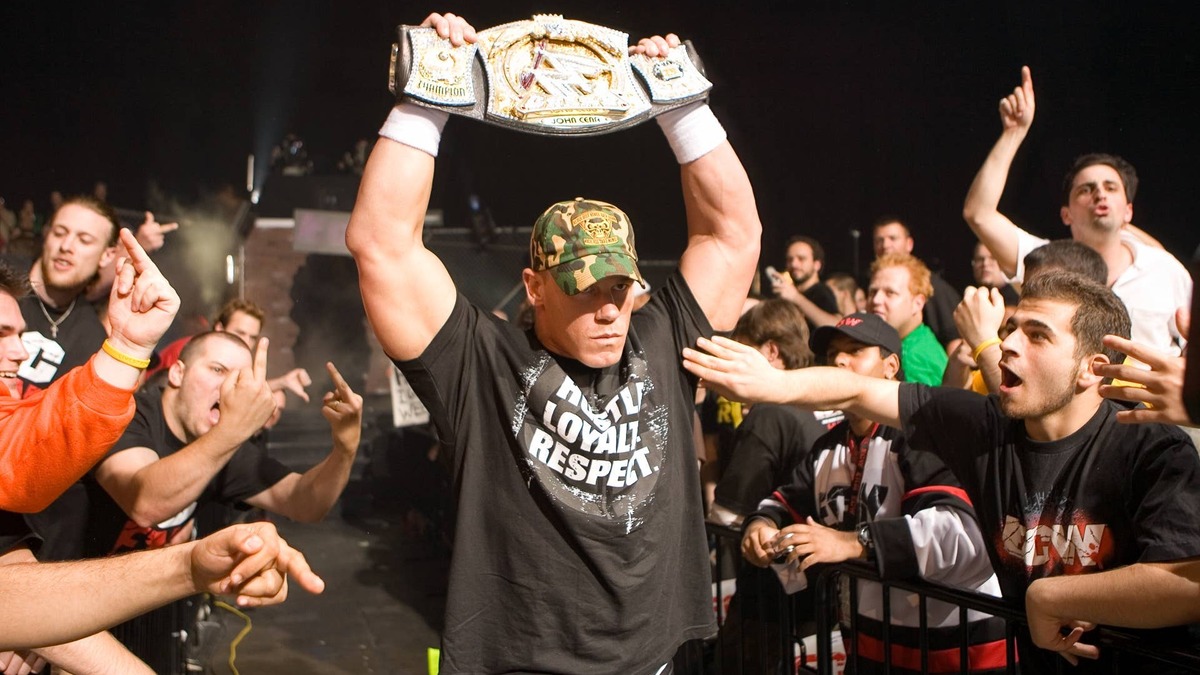
Twenty years is a long time in professional wrestling.
In 2006, John Cena was still establishing himself as the face of WWE. Batista was becoming one of the company’s biggest stars. Edge finally broke through as WWE Champion. Rey Mysterio won the Royal Rumble and World Heavyweight Championship, D-Generation X reunited, and WWE even brought ECW back from the dead as a third brand.
Read more Braves reinstate All-Star reliever Robert Suarez from IL
It wasn’t all great. This was also the year Vince McMahon booked himself and Shane McMahon against Shawn Michaels and “God” at Backlash, which is every bit as ridiculous as it sounds.
But I was 10 years old in 2006, and I remember it as a good year to be a WWE fan. Twenty years later, I cover wrestling for a living, and while WWE is still recognizably WWE, almost everything surrounding the product has changed.
WWE Was Still Recovering From the Loss of Eddie Guerrero
You can’t really talk about WWE in 2006 without Eddie Guerrero.
Guerrero died unexpectedly in November 2005 at just 38 years old, and his absence hung over much of the following year. Nowhere was that more apparent than with Rey Mysterio, who dedicated his Royal Rumble victory to Guerrero before winning the World Heavyweight Championship at WrestleMania 22.
Eddie’s death eventually became part of WWE storylines involving Mysterio, Chavo Guerrero and others, sometimes in ways that remain uncomfortable to revisit. But there’s no separating his legacy from the story of WWE in 2006.
WrestleMania Looked Completely Different
WrestleMania 22 took place at the Allstate Arena outside Chicago, and the card remains remarkably consequential 20 years later.
Mysterio became World Heavyweight Champion. Edge and Mick Foley had their memorable hardcore match. Rob Van Dam won Money in the Bank. John Cena defeated Triple H in the main event.
And Mickie James defeated Trish Stratus for the Women’s Championship, one of the defining matches of both women’s careers and an important moment when looking back at how women’s wrestling in WWE has evolved.
There’s another difference that is almost difficult to imagine today: WrestleMania 22 was the last WrestleMania held in a traditional indoor arena. Beginning with WrestleMania 23, WWE’s biggest show became a stadium spectacle.
In 2026, WrestleMania isn’t simply a wrestling show. It’s a massive multi-day event built for stadiums, tourism, sponsorships and an entire weekend of programming. WrestleMania 22 feels almost intimate by comparison.
The Stars Were Different — But Some Aren’t
The main-event scene in 2006 included Cena, Batista, Edge, Triple H, Shawn Michaels, Randy Orton, Rey Mysterio and The Undertaker.
Here’s the weird part: some of those names aren’t entirely gone.
That’s one of the fascinating things about comparing WWE across 20 years. Randy Orton and Rey Mysterio have remained part of the WWE landscape into the 2020s, while CM Punk — who was just beginning his WWE run in 2006 as part of the new ECW — eventually became one of the biggest stars of his generation.
But the center of gravity has moved. Roman Reigns, Cody Rhodes, Sami Zayn, Drew McIntyre and a younger generation of wrestlers including Bron Breakker and Oba Femi occupy a world that Cena, Batista and Edge once dominated.
WWE Had Raw, SmackDown…and ECW
NXT didn’t exist.
Instead, WWE relaunched ECW in 2006 as its third brand alongside Raw and SmackDown, complete with a weekly television show on the Sci Fi Channel.
The experiment produced some memorable moments. Rob Van Dam defeated Cena at One Night Stand in one of the loudest environments WWE has ever produced, while the brand gave a young CM Punk his first real WWE platform.
It also became increasingly clear that this wasn’t the old ECW. Even WWE’s own retrospective acknowledges how quickly that distinction became apparent.
Today, NXT occupies the third-brand space, but with an entirely different purpose as WWE’s developmental system and pipeline for its next generation.
Read more The Best Young Goalkeepers to Sign in EA FC 27 Career Mode-Ranked
Watching WWE Required a Lot More Patience
There was no WWE Network in 2006. No Netflix era. No instant archive of practically everything WWE had ever produced.
You watched Raw and SmackDown when they aired. ECW came on Tuesday nights. If you wanted to see the biggest events, somebody had to buy the pay-per-view. DVDs still mattered. WWE magazines still mattered. And if you missed something, there was a good chance you simply missed it.
There is more WWE available than I could have imagined at 10 years old. Keeping up with all of it can also feel like a job.
In 2026, access is easier but also more fragmented. WWE content stretches across television, streaming services, YouTube and social media, and fans can watch clips almost immediately after something happens.
Women’s Wrestling Might Be the Starkest Comparison
WWE still presented its women’s wrestlers as “Divas” in 2006, and women’s matches generally received substantially less television time and attention than they do today.
That’s part of what made Trish Stratus vs. Mickie James at WrestleMania 22 stand out.
Twenty years later, women regularly headline major WWE events, compete in Royal Rumbles, Elimination Chambers, Money in the Bank matches and WrestleMania main events. WWE now has multiple women’s championships across its brands and a roster deep enough that finding television time for everyone can be its own problem.
WWE Itself Isn’t Even the Same Company
In 2006, WWE was Vince McMahon’s company.
Today, WWE operates under TKO alongside UFC — something that would have been unthinkable in 2006.
The business has become more deeply integrated into mainstream sports and entertainment, with enormous media-rights agreements, international events and corporate partnerships that would have been difficult to envision in their current form 20 years ago.
Kayfabe Is a Lot Harder to Maintain
In 2006, it was still possible for the average fan to simply watch the show without knowing nearly as much about what was happening behind it.
Today, wrestlers have podcasts. They post from backstage. News breaks on social media in real time. Contract negotiations become stories. Creative decisions are dissected almost immediately.
The curtain isn’t completely gone, but it’s a lot more transparent.
And maybe that’s the best way to think about WWE 20 years later.
Nostalgia can make the wrestling we watched as kids seem better than everything that came afterward. I’m not sure that’s the lesson here.
WWE in 2006 had plenty of flaws, but it also gave us all-time rivalries like Cena vs. Edge, unforgettable moments and a roster that helped define an entire generation of wrestling fans.
What strikes me most 20 years later isn’t that WWE is unrecognizable. It’s that the wrestling ring is one of the few things that hasn’t changed all that much.
There are still heroes and villains. There are still championships, ridiculous storylines, great matches and moments that make you feel like a kid again.
Related: More WWE Stories
Related: Ric Flair Files $10 Million Lawsuit After Allegedly Signing Away Rights to His Own Name
Read more 49ers Make Brock Purdy Announcement Ahead of Cardinals Game
Copyright 2026 The Arena Group, Inc. All Rights Reserved
This story was originally published September 23, 2026 at 10:32 AM.