 By admin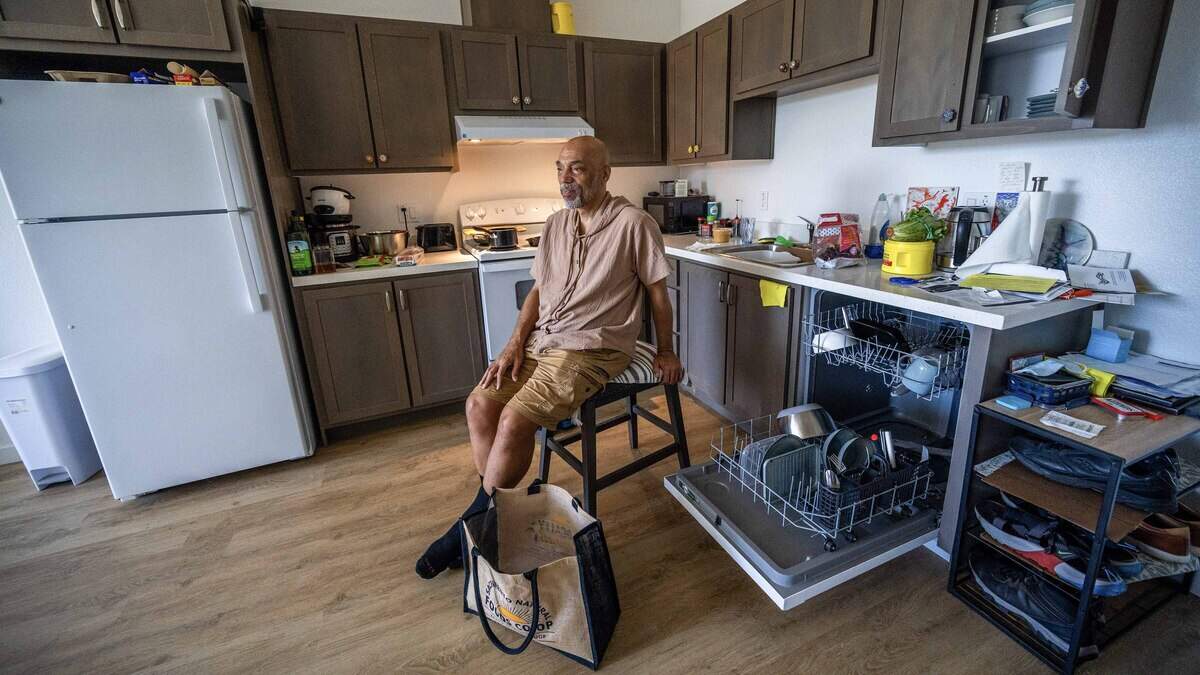
This column is part of “The Poverty Line,” a series examining poverty in California and profiling everyday people working to pay rent, buy food or get healthcare amid rising concerns about affordability.
Read more Why Sacramento dropped a youth violence program that worked. Here’s what to know
One number should stop Californians in their tracks: 16 million.
That’s how many people — roughly 40% of state residents — now live in households that cannot consistently afford the basic cost of living in the counties where they reside, according to new research from the California Association of Food Banks.
California’s safety net programs — CalFresh, Medi-Cal and CalWorks — are designed to help people who are one missed paycheck, rent increase, medical bill, illness or stolen car away from a crisis, including homelessness.
But their ability to prevent homelessness and ease financial calamities has been eroded by eligibility changes enacted last year under the H.R. 1 federal budget bill.
Food access was already vulnerable when H.R. 1 made the largest reductions to food assistance in the nation’s history. Roughly three million Americans lost SNAP benefits, known as CalFresh in California, within just six months.
Work requirements expanded. Eligibility narrowed. Administrative burdens increased, and some costs shifted to states.
Those changes were made, even though, a growing number of to meet their basic needs. It’s something UC Berkeley researchers warned about a decade ago. Since 1979, wages for the nation’s highest earners have nearly doubled, while pay for the bottom 90% has risen just 44%, according to the Economic Policy Institute.
Fragile stability
Like many Californians who have used public assistance, Jocelyn Wright of Sacramento had finally begun to find stability in her life, earning about $3,000 a month and securing housing with help from social services and a nonprofit.
Then an unexpected auto repair left her short on rent. The financial shock triggered a bout of anxiety one day that made her feel she couldn’t safely work her shift as a medical transporter. She lost her job, and with it, the financial footing she had worked so hard to build. Now she fears losing her housing as well.
The Public Policy Institute of California recently reported that, in 2024, roughly one in three Californians fit the profile of poor or nearly poor that describes Wright and many others.
Stevan Gaskill, 61, lives just above the federal poverty level with a monthly disability check of $1,600, roughly $19,000 a year, but he said he can barely pay the rent of $1,300 at his affordable housing community.
Just a few years ago, Gaskill managed to make the numbers work by supplementing his disability check with gig work, transporting passengers and delivering food. State food programs like CalFresh helped cover his groceries. He carefully balanced a car payment, insurance premiums and credit-card bills.
Then, sciatica made it painful to get in and out of his vehicle, and the gig work disappeared overnight.
Jobs are no guarantee of security
Without that extra income, everything else unraveled. Gaskill gave up his new car but was still responsible for debt on the vehicle he had traded in. He could no longer afford to make one credit card payment. Now he is looking for an apartment with even lower rent because his current housing is becoming difficult to afford.
Read more Is it legal for CA drivers to pass bikes on the road? Here’s what state law says
These stories illustrate why traditional definitions of poverty no longer serve millions of Californians — or the state’s economy.
For decades, Americans have been told that hard work is the path to financial security. Increasingly, however, the challenge isn’t simply finding work. It’s finding work that pays enough to keep pace with the cost of living.
It is not only California’s poorest residents who are affected by changes to the safety net. It is also a large segment of low-wage and even middle-class earners, said Mary Lynn Tan, research director with the California Association of Food Banks.
In San Francisco, for example, a two-income household with two beginning teachers earning $128,000 would still fall about $35,000 short of covering basic expenses. By federal standards, that family is making 400% of the federal poverty level. In California, they might have to seek help from a food bank.
“Even if you’re making 400% of the national federal poverty level, it’s still not enough to cover your most basic, basic expenses,” Tan said.
The face of economic insecurity now includes many essential workers: educators, home health aides and more.
In Sacramento County, where Gaskill and Wright live, the United Way RealCost measure shows that it takes an average of $39,528 a year for adults their ages to get by. Wright earned $3,500 less than that at her last job. Gaskill earns $20,000 less on his fixed income.
A yearning to live before they die
What happens when a growing share of Californians depend on systems that are becoming harder to access?
Gaskill said he wanted to work to see whether he could consistently earn enough to support himself, but income limits made that impossible. Wright wanted to keep her housing but nearly could not find the support she needed to get through a financial setback.
California leaders should pursue the long-term work of raising wages for the bottom 90%, expanding opportunity and helping more residents become self-sufficient.
But families cannot wait. Lawmakers must stop treating hunger as an emergency that warrants one-time appropriations.
“I’m trying to do all the right things to get myself on the right track so that I can live before I die,” Wright said.
The Bee’s Ariane Lange contributed to this story.
Getting Help
CalFresh Check eligibility. Looking for affordable housing? Learn more here. Need help managing debt? Sacramento offers help. Need medical care. Covered California can connect you to Medi-Cal or a third-party plan. Struggling to pay utilities? CARE, FERA, Roseville Electric and SMUD offer options. Want to build emergency savings? City of Sacramento offers coaching.
Read more Workplace AI surveillance limits considered by lawmakers. What would the bill do?