 By admin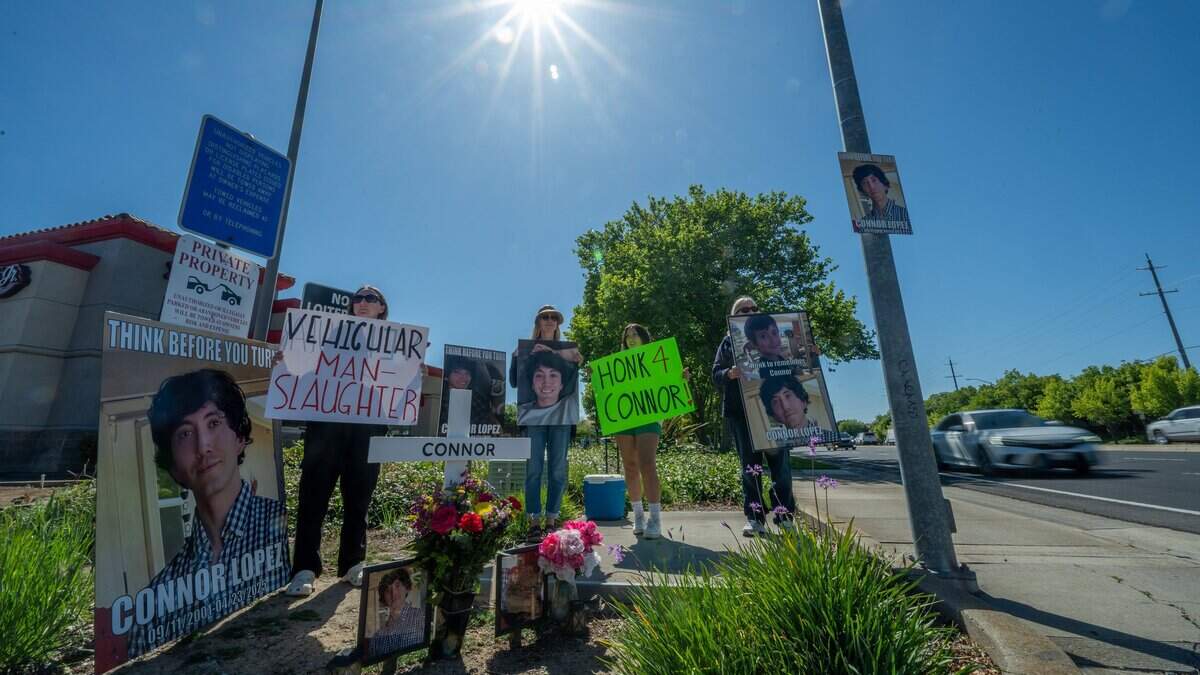
Accidentally killing someone with a vehicle has been a special type of manslaughter in California for more than 80 years. Why?
Read more After fighting leukemia, Greg Papa sadly loses the job he hoped to regain | Opinion
Manslaughter is a type of unlawful killing that is committed unintentionally, without pre-planning or malice. This is generally considered a serious crime, but less heinous than planning to kill someone. Under California Penal Code, as enacted in 1872, the state originally defined only two types of manslaughter: “voluntary” and “involuntary.” In the early decades of California car culture, drivers could be charged under those two types if they unintentionally killed people.
However, that changed in 1945, when California lawmakers argued that juries had become so sympathetic to drivers that they were seldom convicting defendants on manslaughter charges.
Recent criminal prosecutions of drivers who killed people have made the news, including the case of Connor Lopez, 23, a Land Park resident and Sacramento City College student who was killed in a crash in Elk Grove. The driver has been charged with misdemeanor vehicular manslaughter. In San Francisco, another vehicular homicide case made national headlines in March when a judge sentenced Mary Fong Lau, 80, to probation and community service for running over and killing a family of four.
In California, these prosecutions have a long history.
What is manslaughter in California?
Manslaughter is, generally, an unlawful killing that was unintentional.
Voluntary manslaughter is the most serious type of manslaughter. State law says this type could occur in “a sudden quarrel” or in the “heat of passion.” A sentence could be as long as 11 years in state prison.
Involuntary manslaughter is considered less serious. This is when a person kills someone with no “quarrel” or “heat of passion.” A death could be considered involuntary manslaughter if the perpetrator inadvertently killed someone while doing something illegal. A homicide could also be considered involuntary manslaughter if the perpetrator inadvertently killed someone while doing something both legal and potentially dangerous, but doing it in a reckless or unlawful manner, or without “due caution.” For an involuntary manslaughter charge, a person could be sentenced to up to four years behind bars.
Involuntary manslaughter has a lot of overlap with car crash deaths: Driving itself is legal, but it is also inherently risky due to the size and speed of cars; it’s possible to make illegal moves while driving and put other road users at risk.
However, California law explicitly says that involuntary manslaughter “shall not apply to acts committed in the driving of a vehicle.”
That’s partly because in 1945, lawmakers added a third and less serious type of manslaughter: vehicular manslaughter.
How did vehicular manslaughter become a special homicide?
The path to the “vehicular homicide” change was a little circuitous. In 1935, the legislature created a type of homicide that could be prosecuted under the California Vehicle Code. Those cases would be easier to prosecute, but district attorneys could still choose to file manslaughter charges under the Penal Code.
In 1941, the legislature changed the law again, saying that drivers could not be prosecuted for involuntary manslaughter under the Penal Code. They would have to be charged under the Vehicle Code, which came with a lighter sentence.
Read more 49ers practice overshadowed by big-name absences, but Brock Purdy shines
In 1945, state Senator Irwin Quinn of Eureka authored Senate Bill 504, which ultimately created a separate category of “vehicular manslaughter” under the Penal Code. Because the law had bounced between the Vehicle Code and the Penal Code, vehicular manslaughter already had separate, lighter sentencing under criminal laws.
Into the 1930s, when a much smaller share of Californians were drivers, people tended to sympathize with the victims of fatal crashes. The Sacramento Bee ran a story in 1925 under the headline “MOTORIST HAS MORAL RESPONSIBILITY NOT TO DRIVE TOO FAST” and the subheadline “Most Flagrant Violation By Pedestrian Does Not Justify His Injury.” The story said a car amounted to a “deadly weapon.”
That attitude changed over time. The Richmond Independent ran an article about Quinn’s bill in June 1945, reporting that the change had to be made because juries’ sympathies lay with accused drivers.
“Enforcement officials contend that juries are reluctant at present to recommend a manslaughter conviction, which now almost automatically sends the convicted person to state prison,” the story said.
What is vehicular manslaughter?
Nowadays, vehicular manslaughter has three types: it could be charged as manslaughter with gross negligence, manslaughter without gross negligence, or manslaughter with the intent to defraud an insurance company.
“Gross negligence” is a high bar. And under the manslaughter section, “gross negligence” does not include DUI crashes, which have their own separate section.
Vehicular manslaughter with gross negligence — the most serious type of vehicular manslaughter — could be punished with up to a year in county jail or with a state prison sentence that could be as long as six years.
Vehicular manslaughter without gross negligence could result in a maximum sentence of one year in county jail.
If you look at sentence severity, the worst type of vehicular manslaughter is inadvertently killing someone while trying to defraud an insurance company. In California, if a human being died when your intended victim was an insurer, that could get you slapped with 10 years in prison.
Read more Malachi Toney ‘glows’ on and off the field. Hurricanes star is ready for Year 2