 By admin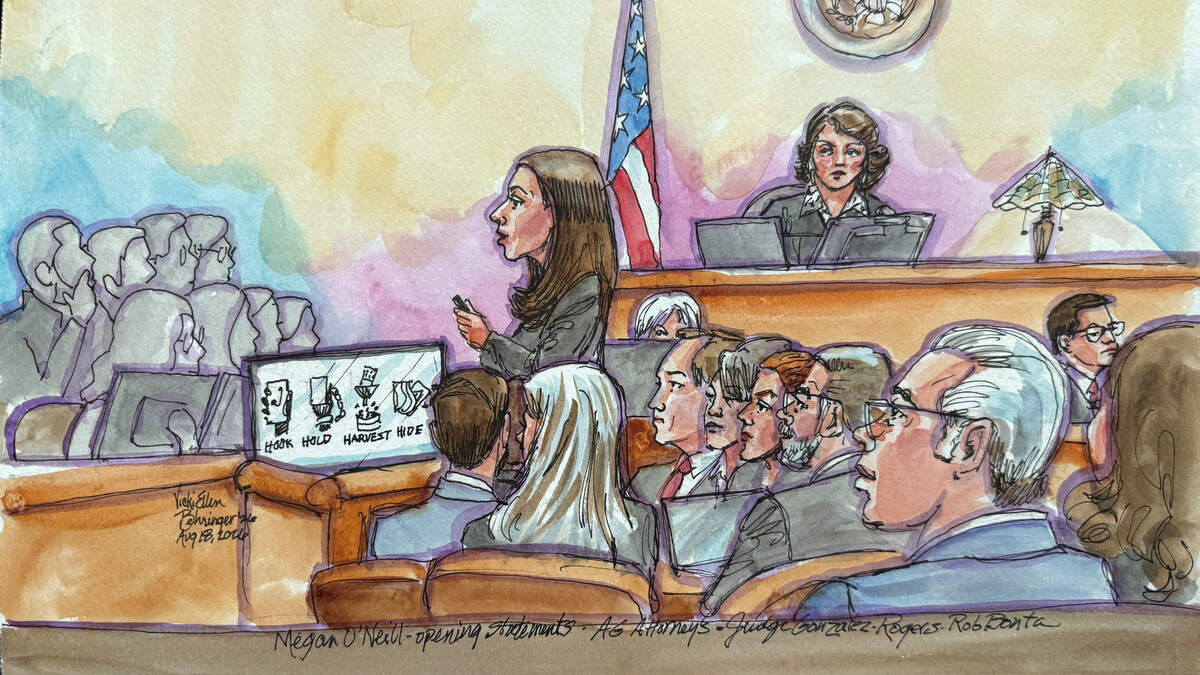
The social media giant Meta, which owns Facebook and Instagram, ignored evidence that its platforms were addictive and harmful to children, instead ramping up efforts to hook young kids and teens and harvest their data to boost profits, lawyers for California and other states told a federal jury in Oakland on Tuesday.
Read more California sets new efficiency rules for replacement tires. What drivers should know
The company used its knowledge of developing brains to exploit their vulnerabilities, Deputy California Attorney General Megan O’Neill said in her opening statement for the highly anticipated trial in a case against Meta brought by 29 states. The states accuse the Menlo Park based firm of violating consumer protection laws including the Children’s Online Privacy Protection Act, which bans the collection of data about children younger than 13 without their parents’ permission.
“This case is not about taking away Instagram,” O’Neill said. “This case is about whether Meta misled the public about the risk to kids on its platforms, about whether Meta acted unfairly and about whether Meta violated the children’s online privacy act.”
The lawsuit, filed in 2023 by 33 states but pared down to 29 for the trial, comes amid heightened concerns across the U.S. and other countries about how social media and other technology harm children and teens. Led by California, Colorado, Kentucky and New Jersey, the states allege that Meta engaged in deceptive and unfair business practices, lied in public statements about what it knew and did not comply with the children’s privacy law.
With Facebook Chairman and CEO Mark Zuckerberg and Instagram head Adam Mosseri both expected to testify, it will be the most highly visible examination yet of the company’s actions regarding the activities of young people on its platforms.
‘Ensnare youth and teens’
In their complaint against Meta, the states and their attorneys general say that over the past decade, the company has reshaped the social and psychological lives of a generation.
“Meta has harnessed powerful and unprecedented technologies to entice, engage, and ultimately ensnare youth and teens,” the complaint says. “Its motive is profit, and in seeking to maximize its financial gains, Meta has repeatedly misled the public about the substantial dangers of its social media platforms.”
The states do not plan to allege harm to specific children or ask families to testify, O’Neill said in her opening. Instead, they will focus on the company’s own internal studies and communications to show that it ignored evidence that young people frequently reported that they could not stop using the platforms, that 20% or more of teens felt worse after using them, and that many experienced bullying, unwanted advances, and other inappropriate content.
The company’s internal research showed that users who started young were most likely to stay with the platform as they grew older, O’Neill said, prompting one employee to say in an internal communication that “the young ones are the best ones.”
Children and teens, she said, are still developing impulse control and are susceptible to material that provides rewards, such watching for “likes” on their posts.
“Meta hooked kids on its platforms by taking advantage of how their brains worked,” she said.
Is Facebook too uncool to be dangerous?
But Meta attorney Paul Schmidt told the jury of eight people that the states were exaggerating the evidence against the company by taking internal research and communications out of context, and downplaying the work Facebook and Instagram have done to close accounts improperly held by children under the age of 13.
Read more Yolo County seeks input on renaming Cesar Chavez Community School in Woodland
Nearly all Facebook users — about 96% — are adults, Schmidt said, leading the platform to be considered undesirable by many of today’s teens. He did not give statistics for Instagram, but said that while its users skewed younger, their demographics were comparable.
He also took issue with the states’ contention that the company falsely assured parents and community leaders that they were concerned about young people’s well-being and mental health. A company blog post with the title “Continuing to Keep Instagram Safe and Secure,” was not a false flag meant to trick parents into thinking Meta cared about kids’ mental health, but was in fact about the importance of having a strong password, he said.
More than once, Schmidt asked the jury to keep an open mind, asking members to wait until Meta had put on its case to decide about whether the company acted inappropriately.
The states, he said, will have to prove their contentions with evidence, and not just make allegations about the company’s actions.
Competing legal theories
A key difference between the two sides, he suggested, lay in competing legal definitions regarding the company’s knowledge that kids younger than 13 were on its platforms.
The states allege that the company’s awareness that such children used Facebook and Instagram without express consent from their parents, and its continued development of features that could be addictive to kids, shows that it violated laws meant to protect children and consumers.
But Schmidt said Meta interpreted those laws to mean that if the company had specific knowledge that a particular child was using the platform illegally, it was then required to remove that child’s account. Meta, he said, had done that. He cited testimony that Facebook Global Head of Safety Antigone Davis had given before Congress in 2021, in which she said that in the three months from June through August that year the company had removed 600,000 accounts involving underage Instagram users.
“Ask yourself as you hear the evidence, ‘Does it support the things they have to prove to support their claims?’” Schmidt said.
The company was not deliberately targeting children with its products, he said.
The states are asking for a permanent injunction ordering the company to end any practices found to violate the Children’s Online Privacy and Protection Act and pay damages and restitution to the jurisdictions that are suing. Individually, the states are also asking the court to order the company to comply with their consumer protection laws and pay their legal expenses.
The trial before U.S. District Judge Yvonne Gonzalez Rogers is expected to last for several weeks, with jury deliberations continuing into early October, court records show.
Read more California sets new efficiency rules for replacement tires. What drivers should know